Japanese living rooms often blend minimalism with a warm, inviting atmosphere that speaks to simplicity and harmony. With natural materials, clever space-saving solutions, and a focus on functionality, these ideas can help create a serene and stylish retreat in your own home. Let’s check out some easy and practical inspirations to bring that tranquil Japanese vibe to your living space.
Natural Elements: Wood and Stone Accents
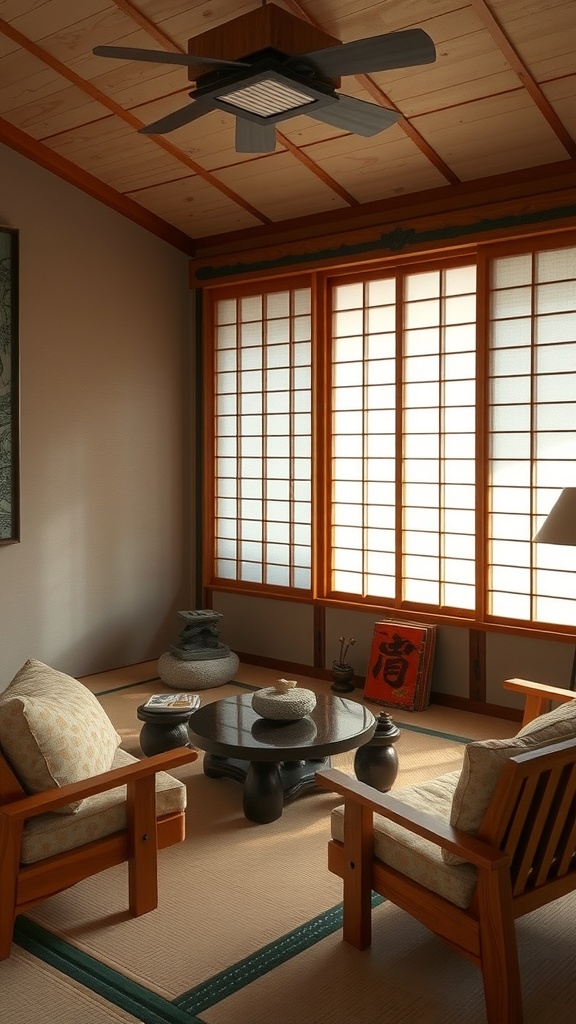
In this cozy Japanese living room, natural elements play a key role in creating a warm and inviting space. The wooden accents are prominent, from the ceiling beams to the chairs, showcasing the beauty of craftsmanship. The rich tones of the wood add a sense of comfort and connection to nature.
The stone elements, like the decorative rock and the table, introduce a touch of earthiness. This blend of wood and stone creates a balanced atmosphere, perfect for relaxation. The round table invites gatherings, making it a great spot for tea or conversation.
Large windows allow natural light to flood the room, enhancing the wooden features and making the space feel open. The shoji screens provide privacy while maintaining a connection to the outside world. This design reflects a harmonious lifestyle, where nature and home coexist beautifully.
Incorporating Shoji Screens for Privacy
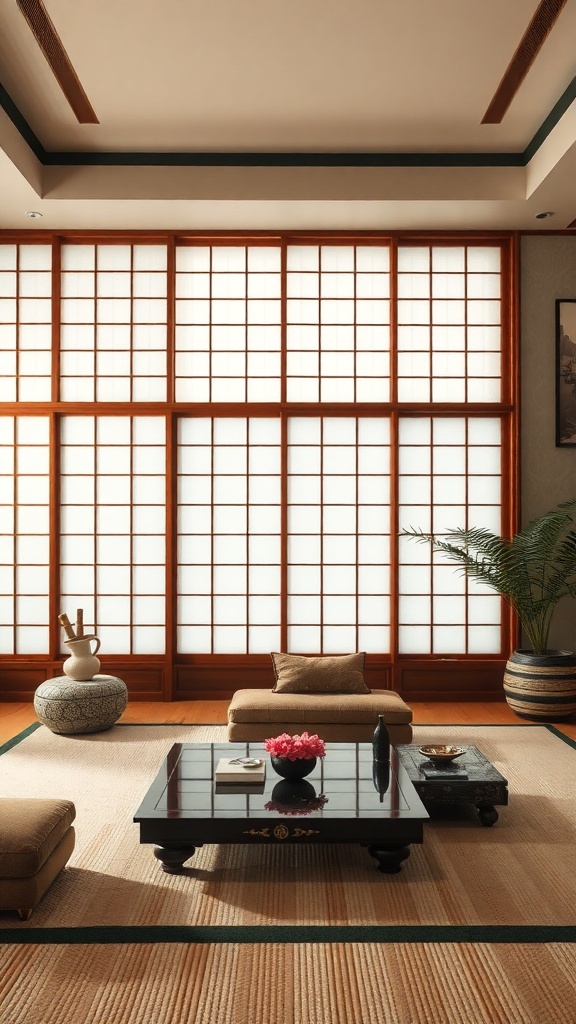
Shoji screens are a fantastic way to add privacy to your living space while keeping that airy feel. These traditional Japanese screens are made of wood and rice paper, allowing soft light to filter through. They create a serene atmosphere, perfect for relaxation.
In the image, you can see large shoji screens that act as a beautiful backdrop. They separate the room while still letting in natural light. This design choice enhances the overall aesthetic, making the space feel open yet cozy.
Using shoji screens can also help define different areas in your living room. Whether you want to create a reading nook or a small workspace, these screens can easily be moved or adjusted. They blend seamlessly with other elements, like the low seating and natural materials seen here.
Incorporating shoji screens is not just about privacy; it’s about embracing a style that promotes tranquility. They can be a stunning focal point, drawing the eye and inviting a sense of calm into your home.
Creating a Harmonious Color Palette
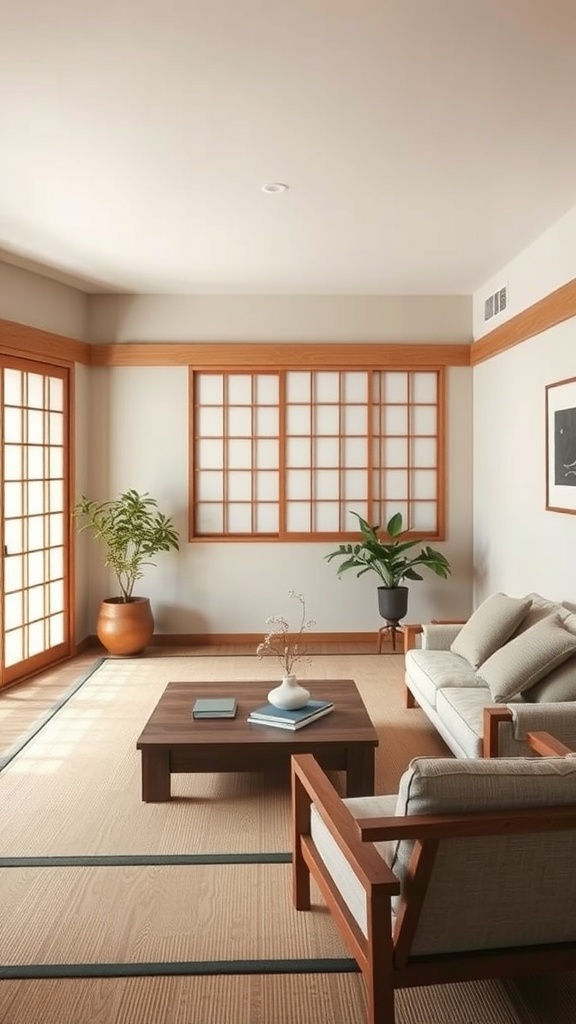
In a Japanese living room, the color palette plays a key role in creating a calm and inviting space. The image shows a serene room with soft, neutral tones that blend beautifully with natural materials. The light walls and wooden accents create a warm atmosphere.
The furniture is simple yet stylish, featuring a light-colored sofa paired with a dark wooden coffee table. This contrast adds depth without overwhelming the senses. The use of plants brings a touch of nature indoors, enhancing the overall tranquility of the space.
When choosing colors, think about soft whites, beiges, and earthy tones. These shades promote relaxation and harmony. Incorporating natural elements like wood and plants can further enhance the peaceful vibe of your living room.
Low Furniture for Comfort and Style
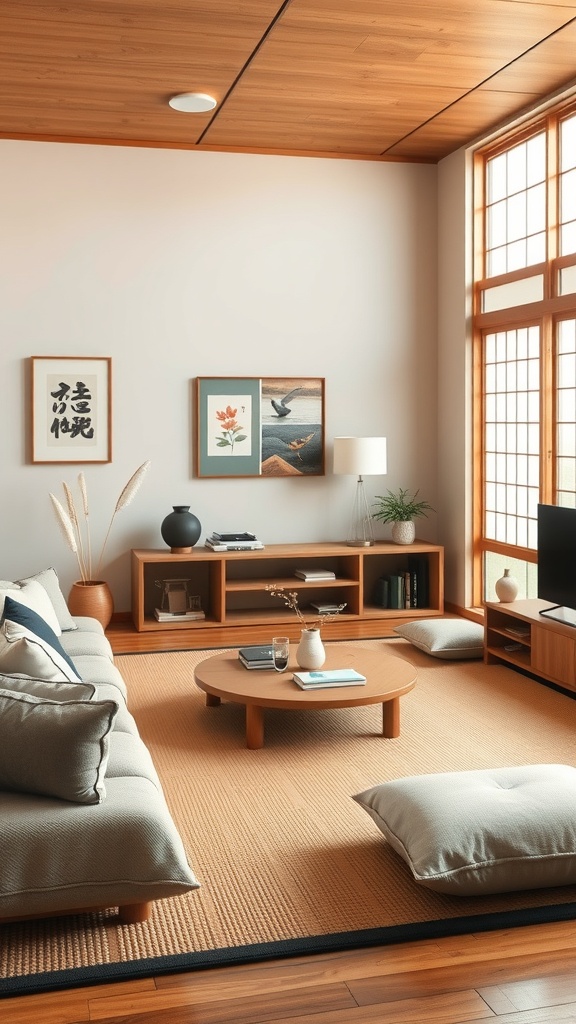
Low furniture is a key element in Japanese living rooms, creating a cozy and inviting atmosphere. The image showcases a beautifully arranged space with a low coffee table and soft seating options. This setup encourages relaxation and conversation, making it perfect for gatherings with family and friends.
The use of natural materials, like wood and textiles, adds warmth to the room. The light color palette enhances the feeling of openness, while the large windows let in plenty of natural light. This design choice not only looks stylish but also promotes a sense of tranquility.
Incorporating low furniture can transform your living space into a serene retreat. Consider adding floor cushions or a low sofa to achieve that authentic Japanese feel. This approach not only maximizes comfort but also creates a unique aesthetic that stands out.
Fusing Modern and Traditional Styles
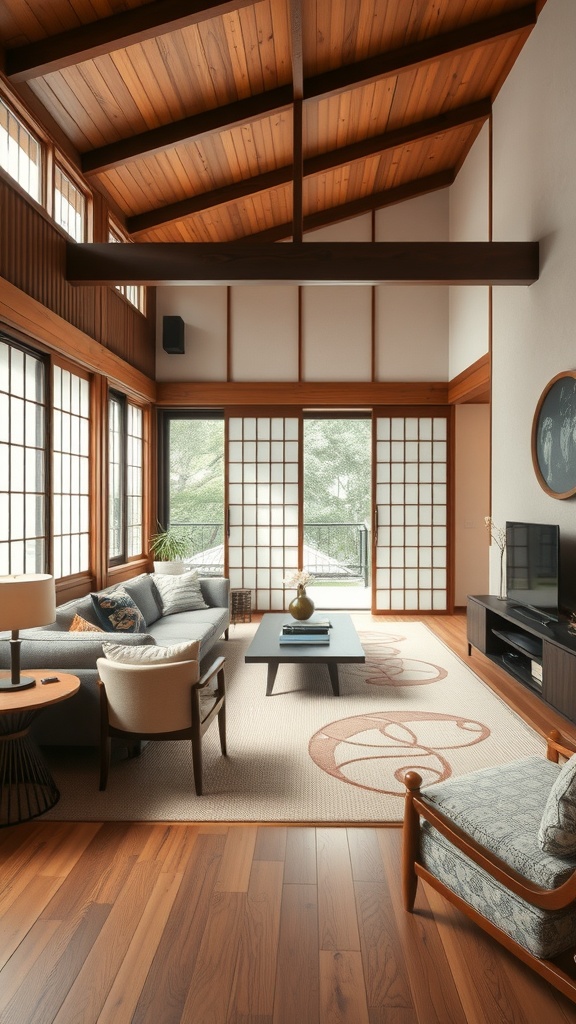
In this stunning living room, the blend of modern and traditional Japanese design shines through. The high wooden beams and shoji screens create a warm, inviting atmosphere. These elements reflect a rich cultural heritage while still feeling fresh and contemporary.
The furniture choices are a perfect mix. The sleek, low-profile sofa contrasts beautifully with the classic wooden chairs. This combination makes the space feel both cozy and stylish. The earthy tones of the wood and the soft textures of the fabrics add to the overall comfort.
Natural light floods the room, thanks to the large windows. This connection to the outdoors is a key feature in Japanese design, emphasizing harmony with nature. The simple yet elegant decor, like the round rug and minimalist coffee table, keeps the focus on the beauty of the space.
Incorporating plants can further enhance this style. They bring life and color, making the room feel more vibrant. Overall, this living room is a perfect example of how to fuse modern and traditional styles in a way that feels effortless and inviting.
Embracing Minimalism with Zen Aesthetics
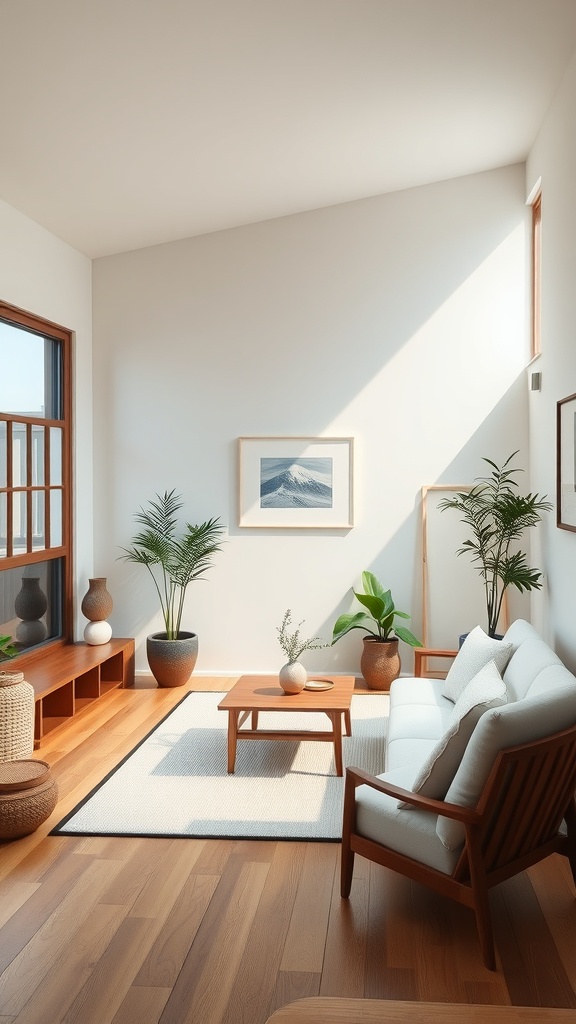
In a Japanese living room, minimalism meets tranquility. The image showcases a serene space filled with natural light. Large windows invite the outdoors in, creating a peaceful atmosphere.
The furniture is simple yet stylish. A light-colored sofa paired with a wooden coffee table adds warmth. The clean lines of the furniture reflect a Zen aesthetic, promoting relaxation and calmness.
Plants are strategically placed, bringing a touch of nature indoors. They not only enhance the decor but also contribute to a refreshing vibe. The subtle art on the walls, like the mountain print, adds character without overwhelming the space.
This living room embodies the essence of Japanese design. It encourages a clutter-free environment, allowing for mindfulness and focus. Embracing such a style can transform your home into a peaceful retreat.
Incorporating Indoor Plants for Freshness
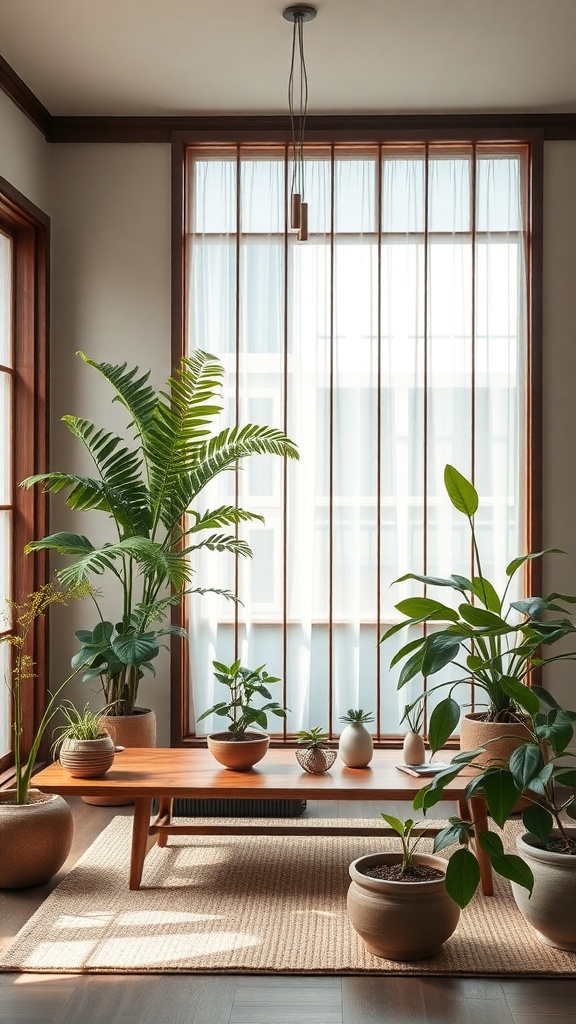
Indoor plants can truly transform a Japanese living room. They add a touch of nature and freshness that brightens up the space. The image shows a cozy setup with various plants, each bringing its unique charm.
The tall green leaves of the ferns stand proudly, while smaller plants sit gracefully on the low wooden table. This mix creates a balanced look that feels inviting. The natural light filtering through the sheer curtains enhances the greenery, making it feel alive.
Choosing the right plants is key. Consider options like peace lilies or snake plants, which thrive indoors and require minimal care. Grouping plants in different sizes can create visual interest and depth.
Don’t forget about the pots! Earthy tones and simple designs complement the natural vibe of the room. This approach not only enhances the aesthetics but also promotes a calming atmosphere, perfect for relaxation.
Tatami Mats: Traditional Flooring Choice
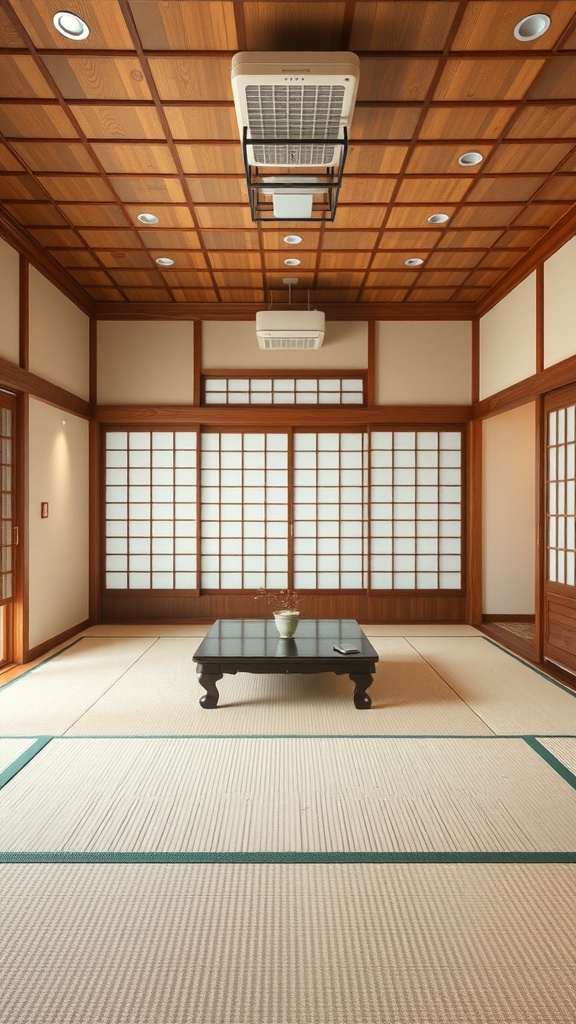
Tatami mats are a classic element in Japanese living rooms. They bring a unique charm and warmth to the space. The image shows a beautiful room with tatami flooring, showcasing the natural textures and colors that make these mats special.
The light, neutral tones of the tatami create a calming atmosphere. This flooring is made from rice straw and covered with woven rush grass, making it both durable and comfortable. The mats are often arranged in a grid pattern, adding to the room’s aesthetic appeal.
In the image, you can see a low wooden table placed on the tatami, which is typical in Japanese design. This setup encourages a relaxed, informal dining or gathering experience. The sliding shoji doors and wooden ceiling enhance the traditional vibe, making the room feel inviting.
Using tatami mats can also improve air quality and regulate humidity, making them a practical choice for any home. They are easy to maintain and can last for many years with proper care. If you’re looking to create a serene and stylish living space, consider incorporating tatami mats into your design.
Open Layouts for a Spacious Feel
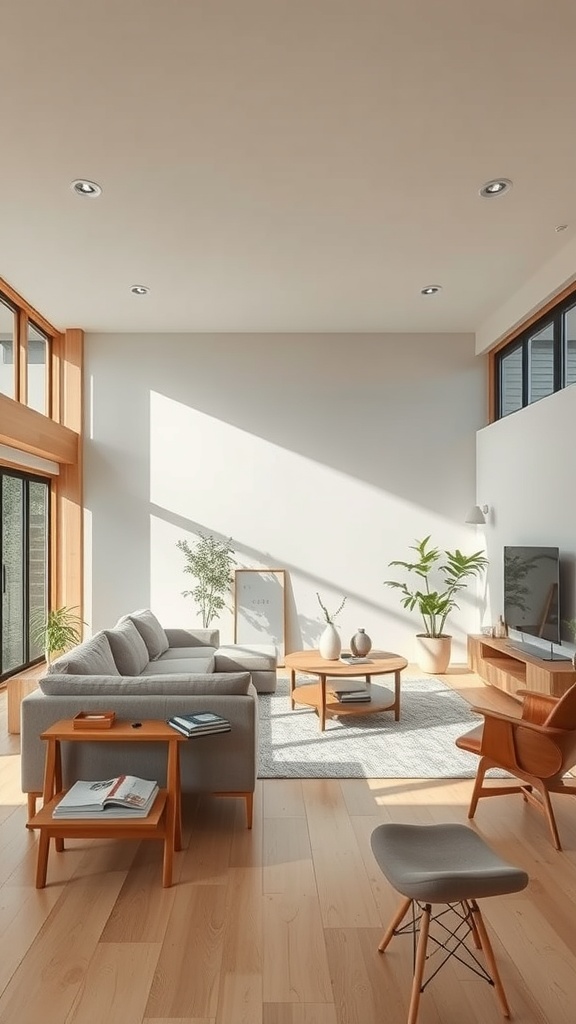
Open layouts are a hallmark of Japanese living rooms, creating a sense of space and tranquility. The image showcases a beautifully designed room that emphasizes simplicity and functionality.
The large windows allow natural light to flood in, enhancing the airy feel. The light wood flooring and neutral tones contribute to a calm atmosphere, making it a perfect spot for relaxation.
Furniture is arranged thoughtfully, with a cozy sofa and a round coffee table at the center. This setup encourages conversation and connection, which is key in Japanese culture. The use of plants adds a touch of nature, bringing life into the space.
Overall, this design reflects the essence of Japanese aesthetics, focusing on harmony and balance. An open layout not only maximizes space but also fosters a warm and inviting environment.
Incorporating Calligraphy and Artwork
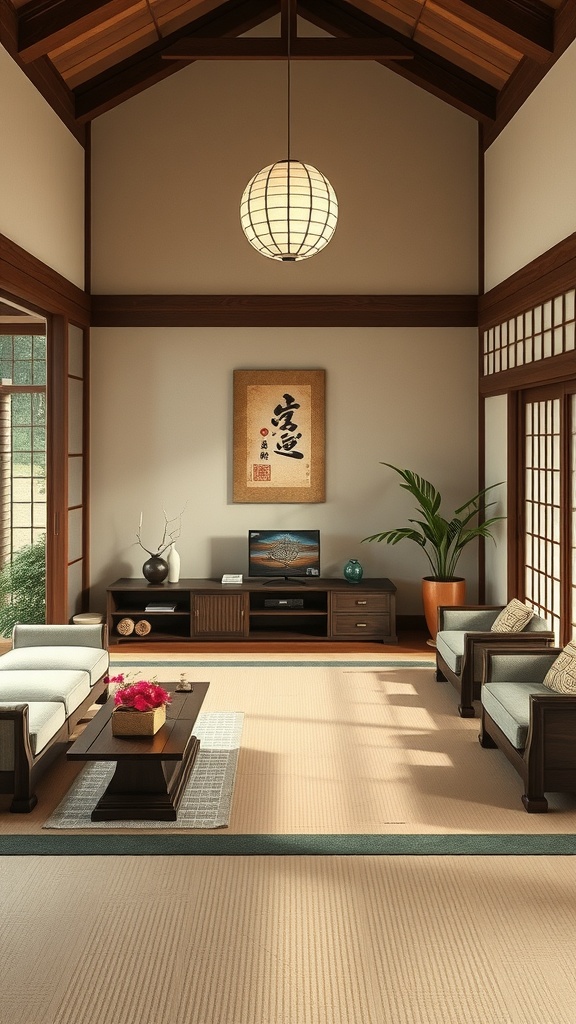
Japanese living rooms often feature beautiful calligraphy and artwork that add a unique touch. The image shows a serene space with a stunning piece of calligraphy hanging on the wall. This art form is not just decorative; it carries deep meaning and reflects cultural values.
The calligraphy in the image is likely a traditional style, showcasing the elegance of Japanese characters. It can serve as a conversation starter and a focal point in the room. Surrounding the calligraphy, the wooden elements and natural light create a warm atmosphere.
Artwork in a Japanese living room can also include landscape paintings or simple floral arrangements. These pieces complement the calligraphy and enhance the overall aesthetic. Incorporating such elements brings a sense of calm and harmony to the space, making it a perfect place for relaxation.
Statement Lighting: Lanterns and Paper Lamps
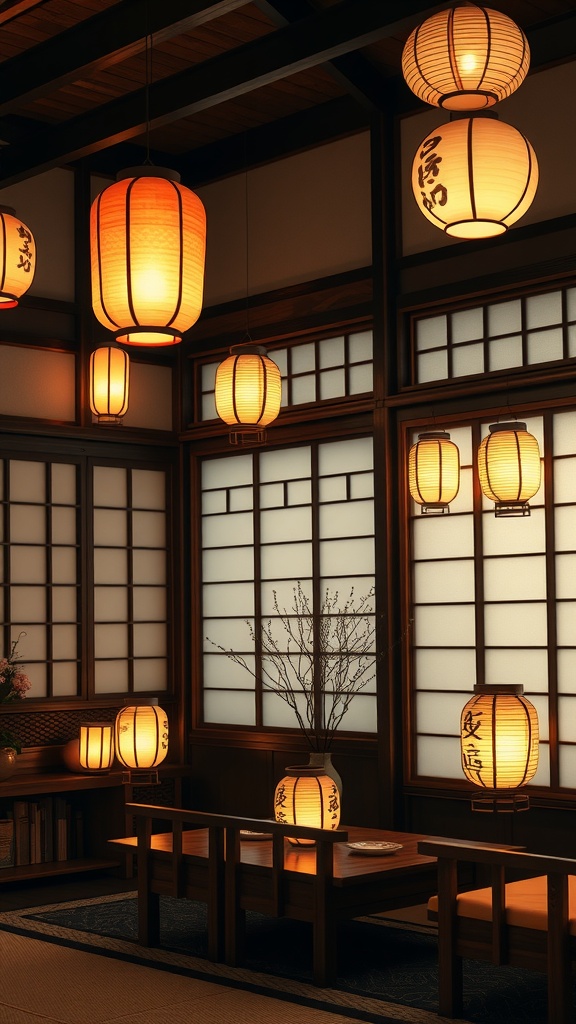
Incorporating lanterns and paper lamps into your Japanese living room can create a warm and inviting space. The soft glow from these lights adds a cozy touch, perfect for relaxing evenings.
The image showcases a beautiful arrangement of lanterns hanging from the ceiling, casting a gentle light throughout the room. The warm tones of the lanterns complement the wooden elements and shoji screens, enhancing the overall aesthetic.
These lights are not just functional; they serve as stunning decor pieces. You can mix different sizes and shapes to create visual interest. Consider placing smaller lanterns on tables or shelves to add layers to your lighting.
Using paper lamps can also bring a sense of tranquility. Their delicate designs and soft light can transform your space into a serene retreat. Whether you choose traditional styles or modern interpretations, these lighting options will surely make a statement.
Balancing Functionality with Aesthetics
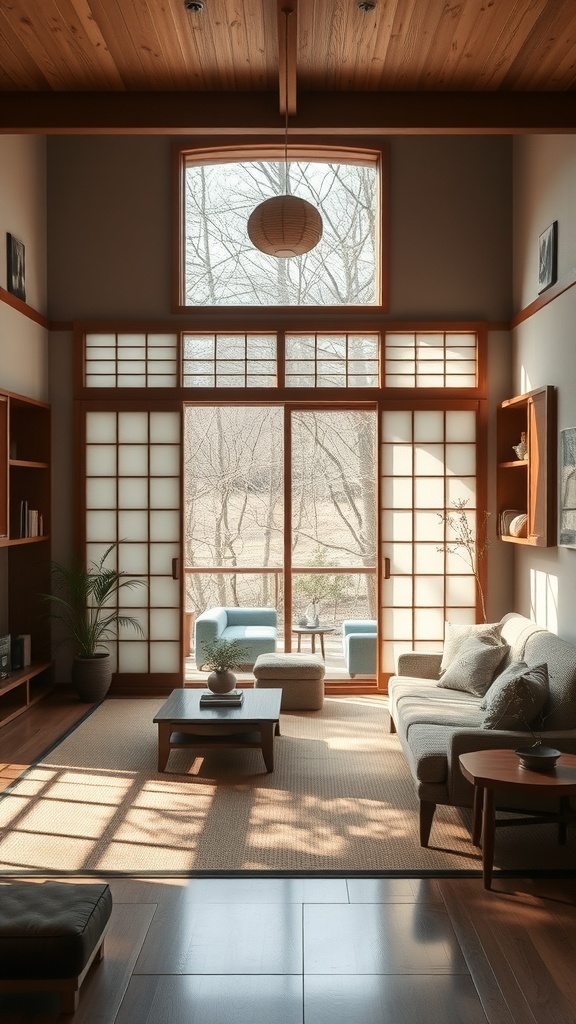
Creating a Japanese living room is all about finding that sweet spot between function and beauty. The image showcases a serene space that embodies this balance perfectly. The large windows let in natural light, making the room feel open and inviting.
The furniture is simple yet stylish, with a cozy sofa and a low table that encourages relaxation. The use of natural materials like wood and tatami adds warmth to the space. Plants are also present, bringing a touch of nature indoors.
Storage is cleverly integrated, keeping the area tidy and clutter-free. This design approach not only looks good but also makes the room practical for everyday living. Overall, this living room is a great example of how to achieve a harmonious blend of functionality and aesthetics.
Using Futons for Versatile Seating
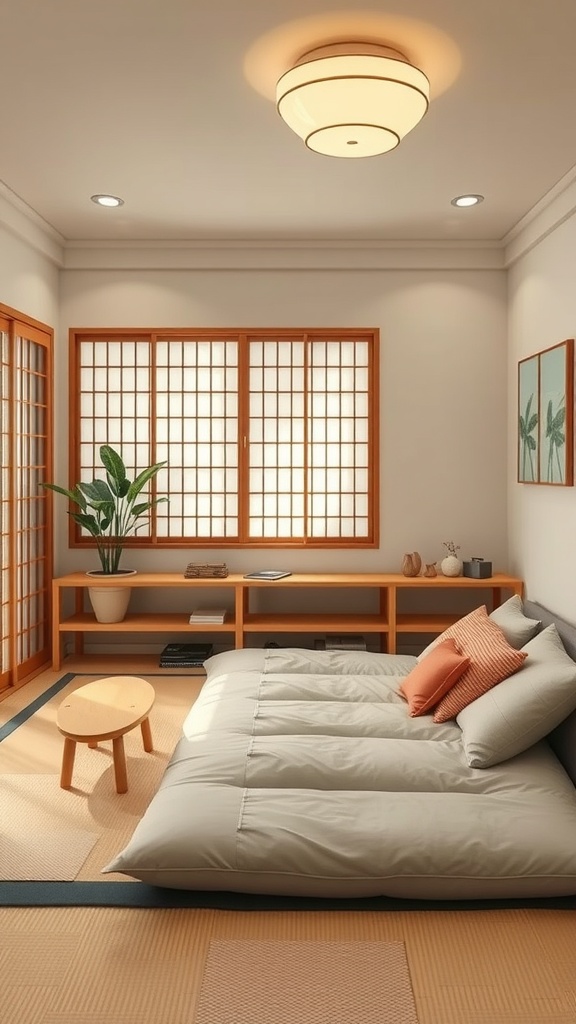
Futons are a fantastic choice for creating a cozy and flexible living space. They can easily transform from a comfortable bed to a stylish seating area. This versatility is perfect for smaller homes or apartments where space is limited.
In the image, you can see a beautiful Japanese-inspired living room featuring a futon laid out on tatami mats. The soft, neutral colors of the futon complement the warm wooden accents of the furniture and window frames. This design not only looks inviting but also promotes a sense of calm.
Futons can be styled in various ways. You can add colorful cushions for extra comfort and personality. The low coffee table in front of the futon encourages a relaxed atmosphere, perfect for casual gatherings or quiet evenings.
Using futons allows for easy reconfiguration of your space. When guests arrive, you can quickly convert the area for sleeping. When it’s just you, it serves as a comfy spot to lounge or read. This adaptability makes futons a smart choice for any living room.
Natural Light: Large Windows and Open Spaces
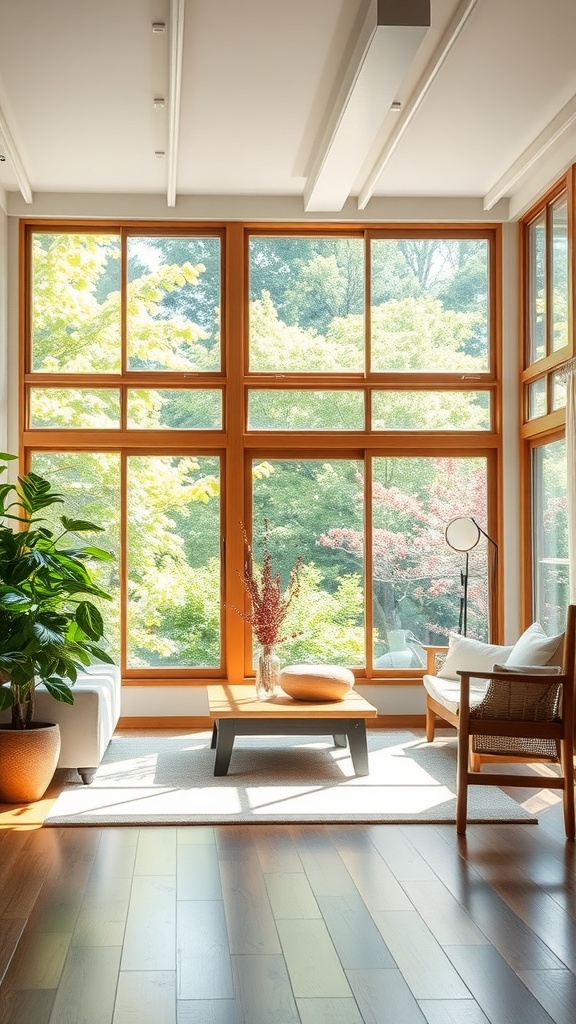
In Japanese living rooms, natural light plays a key role in creating a warm and inviting atmosphere. The image showcases large windows that flood the space with sunlight, highlighting the beauty of the outdoors. This connection to nature is essential in Japanese design.
The open layout allows for a seamless flow between the inside and outside. The wooden frames of the windows add a touch of warmth, complementing the natural elements found within the room. A simple coffee table and comfortable seating invite relaxation, making it a perfect spot for enjoying a cup of tea.
Plants bring life into the space, enhancing the overall feel of tranquility. The light hardwood floors reflect the sunlight, making the room feel even more spacious. This design philosophy emphasizes simplicity and harmony, making it easy to create a peaceful retreat in your own home.
Creating a Tea Corner for Relaxation
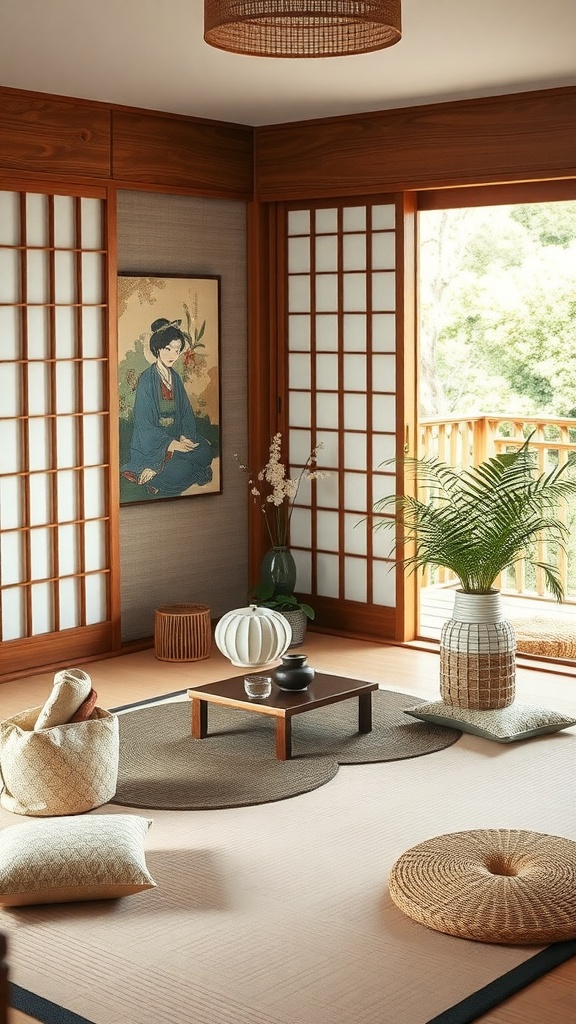
Setting up a tea corner in your Japanese living room can be a delightful way to unwind. The image shows a serene space filled with natural light, perfect for enjoying a cup of tea. The soft colors and natural materials create a calming atmosphere.
A low wooden table sits at the center, surrounded by comfortable cushions. This arrangement invites you to sit and relax. The decorative elements, like the potted plant and traditional artwork, add a touch of elegance and culture.
To enhance your tea corner, think about including a small tea set. A simple teapot and a few cups can make the space feel complete. You might also want to add some books or a cozy blanket for those quiet moments.
Creating this corner is not just about aesthetics; it’s about making a space where you can take a break from the day. Whether you enjoy green tea or herbal blends, having a dedicated spot for tea can bring a sense of peace to your home.
Artful Arrangement of Decorative Items
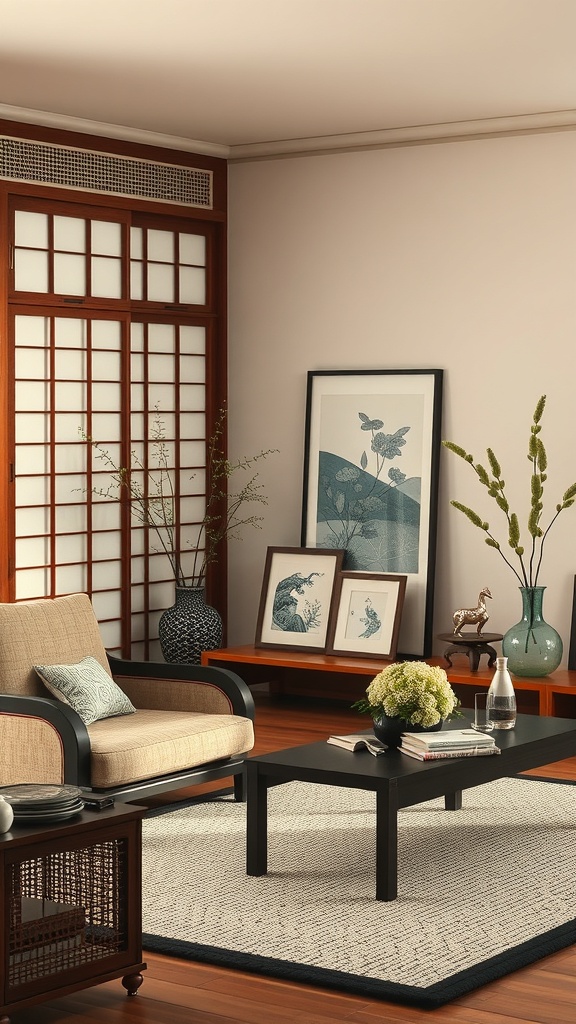
Creating a Japanese-inspired living room means paying attention to how you display decorative items. The image shows a cozy setup that highlights this beautifully. The use of natural elements, like the flowers and plants, brings life to the space.
The furniture is simple yet stylish. The black coffee table contrasts nicely with the warm wooden tones of the room. This balance is key in Japanese design, where harmony is essential. The framed artwork on the wall adds a touch of culture and interest without overwhelming the space.
Notice how the decorative items are thoughtfully arranged. Each piece has its own space, allowing the eye to move freely. This creates a calm atmosphere, perfect for relaxation. The combination of textures, like the woven rug and smooth surfaces, adds depth to the room.
Incorporating elements like a vase or a small sculpture can enhance the aesthetic. Just remember, less is often more in this style. A few well-placed items can make a big impact, keeping the room feeling open and inviting.
Incorporating Sliding Doors for Flexibility
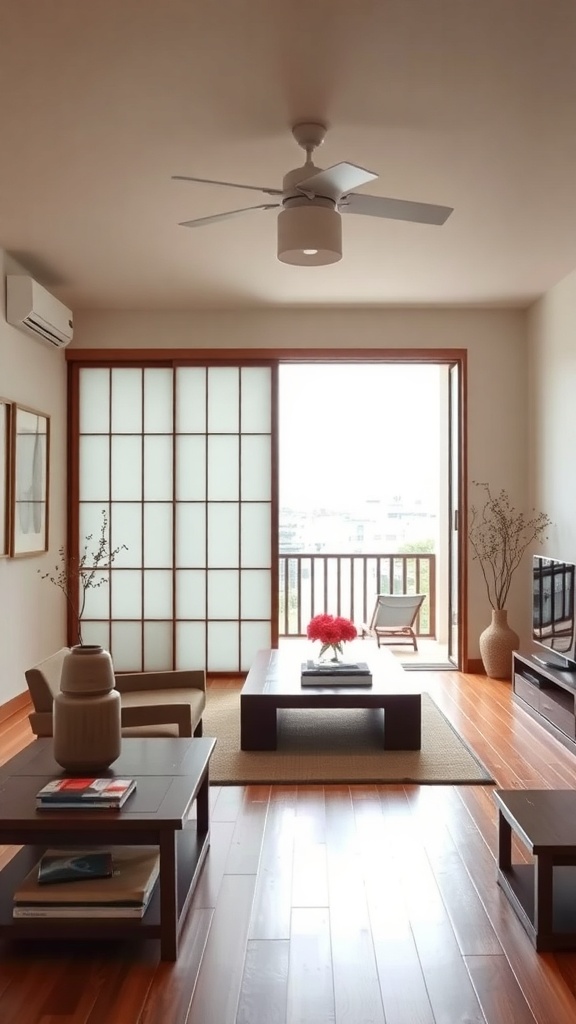
Sliding doors are a fantastic way to bring flexibility into a Japanese living room. They create a seamless transition between indoor and outdoor spaces. In the image, you can see beautiful sliding doors that allow natural light to flood the room, making it feel airy and open.
These doors often feature a traditional shoji design, which adds a touch of elegance. They can be closed for privacy or opened to connect with a balcony or garden. This flexibility is perfect for entertaining guests or enjoying quiet moments alone.
Incorporating sliding doors can also help with space management. When you need more room for activities, simply slide the doors open. This feature is especially useful in smaller homes, where maximizing space is key.
Overall, sliding doors not only enhance the aesthetic appeal of a living room but also provide practical benefits. They are a stylish choice for anyone looking to create a versatile and inviting space.
Creating a Focal Point with a Kintsugi Table
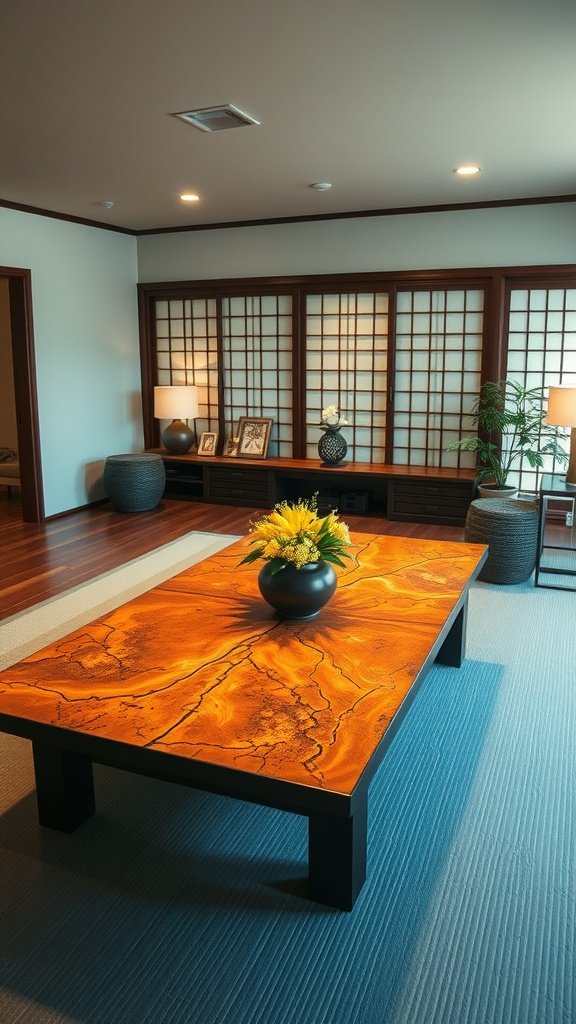
A Kintsugi table can be a stunning centerpiece in your Japanese living room. This unique piece of furniture not only serves a practical purpose but also tells a story of beauty in imperfection. The intricate patterns created by the Kintsugi technique highlight the natural beauty of the wood, making it a conversation starter.
The warm tones of the table contrast beautifully with the soft colors of the room. The black base adds a modern touch while keeping the overall look grounded. Surrounding the table with simple decor, like a vase of fresh flowers, enhances its charm without overwhelming the space.
Incorporating a Kintsugi table into your living room design invites a sense of tranquility. It encourages mindfulness and appreciation for craftsmanship. This focal point not only draws the eye but also creates a warm and inviting atmosphere, perfect for gatherings or quiet moments.
Incorporating a Zen Garden Element
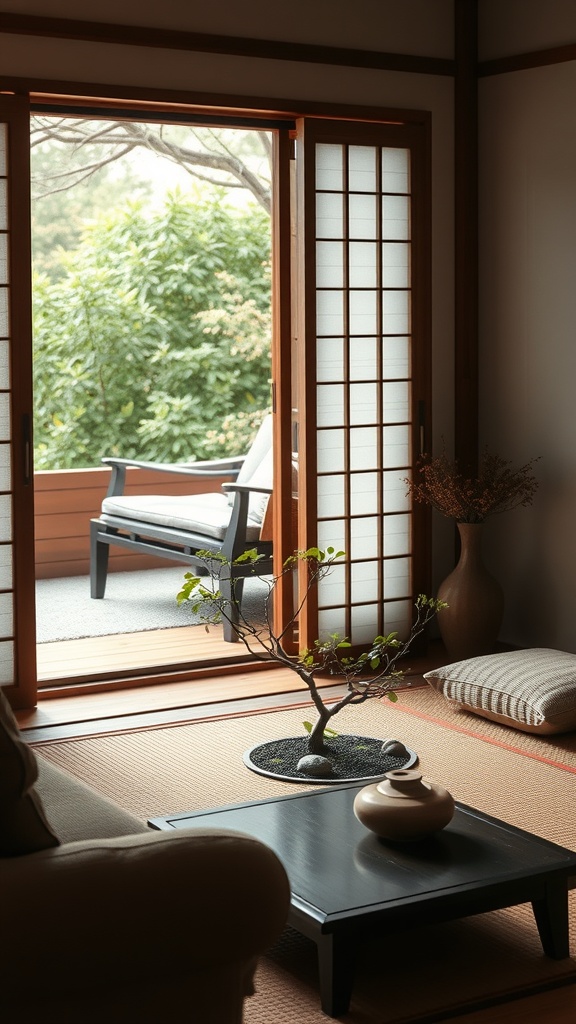
Bringing a Zen garden into your living room can create a peaceful retreat right at home. The image showcases a serene space with a small Zen garden featuring a carefully placed tree and rocks. This setup invites calmness and encourages mindfulness.
The open sliding doors let in natural light and connect the indoors with the lush greenery outside. This flow between spaces enhances the feeling of tranquility. The minimalist design of the room, with its tatami mats and simple furniture, complements the Zen garden beautifully.
To incorporate a Zen garden in your own living room, consider a small tabletop version. Use sand, stones, and a few plants to create your own calming scene. This not only adds beauty but also serves as a meditative space where you can unwind and reflect.
Using Neutral Textiles for Softness
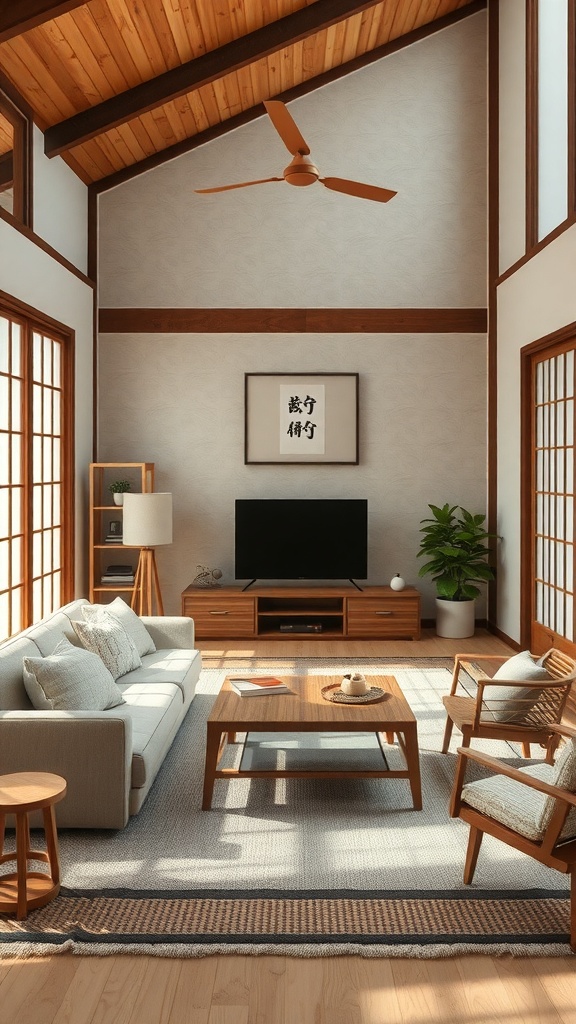
In a Japanese living room, neutral textiles play a key role in creating a warm and inviting space. The image shows a cozy setup with a light-colored sofa adorned with soft cushions. These textiles add a touch of comfort while keeping the overall look serene.
The light hues of the textiles harmonize beautifully with the wooden elements in the room. The natural wood tones of the ceiling and furniture enhance the calming effect, making the space feel open and airy. A neutral color palette allows for easy mixing and matching, giving you the freedom to add personal touches without overwhelming the design.
The rug under the coffee table adds texture and warmth. It ties the room together, making it feel complete. Using neutral textiles not only softens the space but also creates a backdrop that highlights the beauty of the room’s architectural features.
Incorporating plants, like the one seen in the corner, brings a splash of life to the neutral tones. This combination of soft textiles and natural elements creates a balanced atmosphere, perfect for relaxation or entertaining guests.
Cultural Touches: Ikebana Flower Arrangements
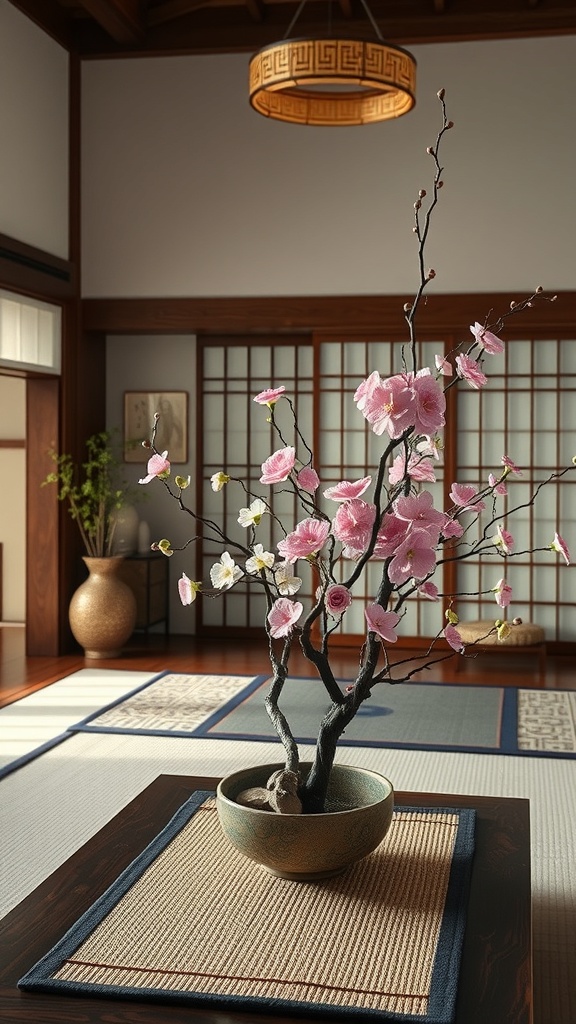
Ikebana is the traditional Japanese art of flower arrangement. It goes beyond just putting flowers in a vase. Each arrangement tells a story and reflects the beauty of nature. The image shows a stunning example of Ikebana, featuring delicate pink and white blossoms on a graceful branch.
This arrangement is placed in a simple, elegant pot, which complements the overall design. The use of natural materials and the careful placement of each flower highlight the importance of balance and harmony in Japanese culture.
Incorporating Ikebana into your living room can bring a sense of peace and tranquility. It encourages mindfulness and appreciation for the beauty around us. A well-placed Ikebana arrangement can serve as a focal point, drawing attention and sparking conversation.
When choosing flowers for your own Ikebana, think about the seasons. Different flowers bloom at different times, and using seasonal blooms can enhance the connection to nature. Remember, the goal is to create a simple yet striking arrangement that resonates with your space.
Layering Textures for Depth
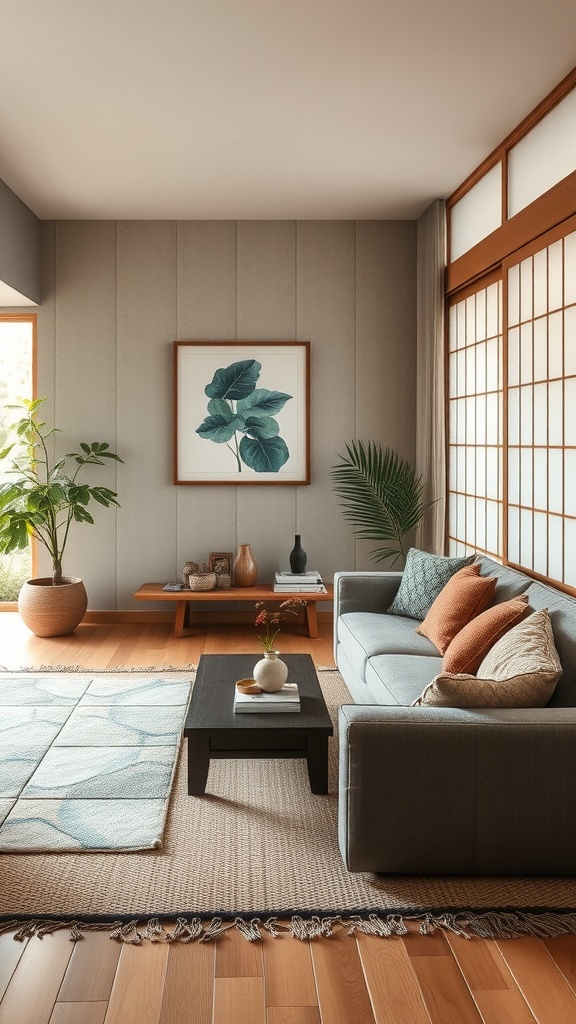
In a Japanese living room, layering textures is key to creating a cozy and inviting space. The image showcases a beautiful blend of materials that add depth and warmth. The soft, neutral tones of the walls complement the rich wooden flooring, creating a harmonious backdrop.
The sofa, adorned with plush cushions, invites relaxation. Notice how the different fabrics—smooth, soft, and woven—work together to create visual interest. The use of a jute rug adds an earthy touch, grounding the space while enhancing the overall texture.
Plants bring life into the room, adding a natural element that contrasts nicely with the structured furniture. The artwork on the wall introduces a splash of color, tying in with the earthy tones found throughout the room. This thoughtful layering of textures not only enhances the aesthetics but also makes the living room feel warm and welcoming.
Creating a Cozy Nook with Floor Cushions
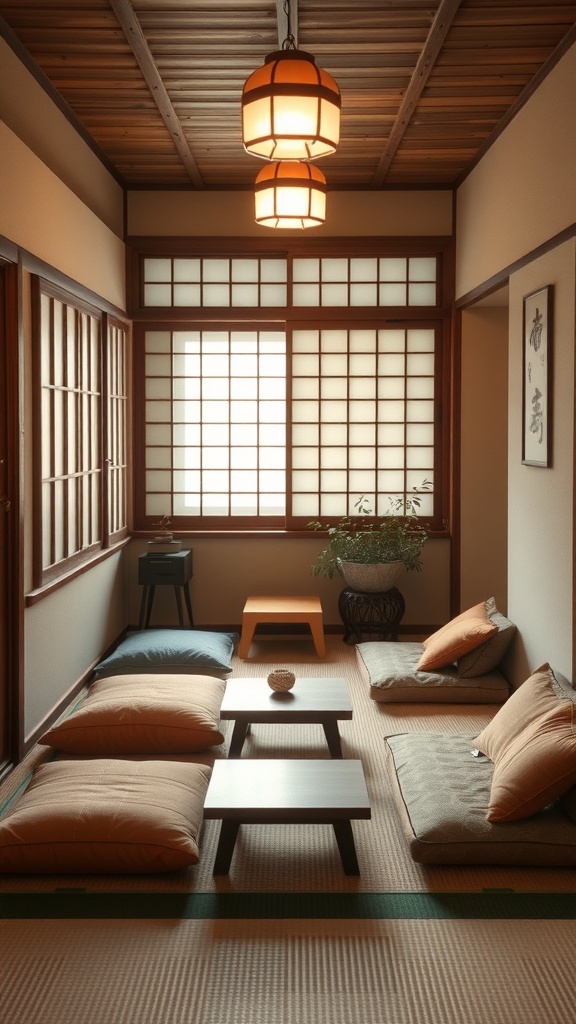
Floor cushions are a fantastic way to create a cozy nook in your Japanese living room. They invite relaxation and comfort, making it easy to unwind after a long day.
The image shows a serene space with soft cushions in earthy tones. The low table in the center adds a touch of simplicity, perfect for enjoying tea or snacks. The natural light filtering through the shoji screens enhances the peaceful vibe.
Choosing cushions in various sizes and textures can add depth to your nook. Pair them with a small table for a functional yet stylish setup. This arrangement encourages a laid-back atmosphere, ideal for reading or chatting with friends.
Don’t forget to include some greenery! A small plant can bring life to the space and enhance the calming effect of your cozy nook. Overall, this setup embodies the essence of Japanese design, focusing on harmony and comfort.
Highlighting Craftsmanship with Handmade Items
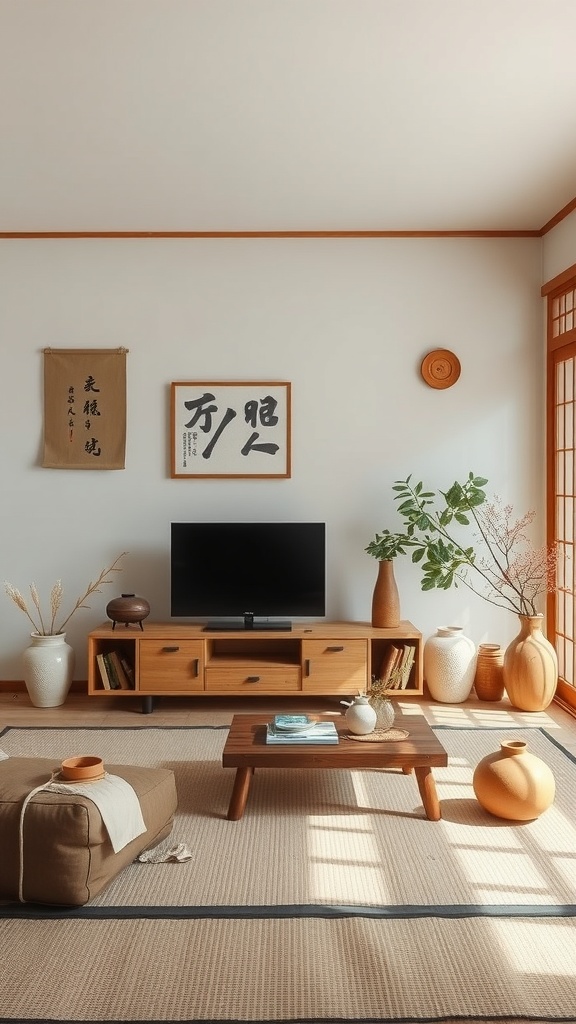
In a Japanese living room, handmade items truly shine. The image showcases a cozy space filled with unique pieces that tell a story. Each item, from the pottery to the wooden furniture, reflects the skill and dedication of artisans.
The warm tones of the wooden furniture create a welcoming vibe. The low table, perfect for tea or casual meals, invites relaxation. Surrounding it are various handmade vases and decorative pieces, adding character and charm.
Natural elements play a big role here. The plants bring a touch of life, while the woven rug adds texture. These details enhance the overall feel of the room, making it a perfect spot for gatherings or quiet moments.
Artistic touches, like the calligraphy on the wall, highlight the cultural richness of Japan. This blend of functionality and art is what makes Japanese living rooms so special. Incorporating handmade items not only supports local artisans but also adds a personal touch to your home.
Creating a Seamless Indoor-Outdoor Flow
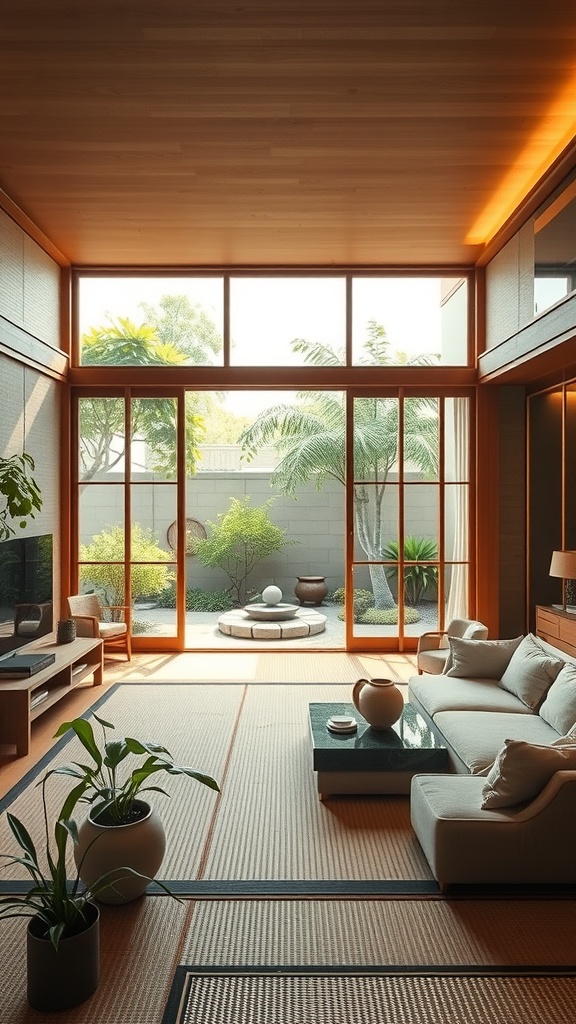
Imagine stepping into a living room that feels open and connected to nature. This space showcases large windows that invite the outdoors in, creating a bright and airy atmosphere. The natural light floods the room, highlighting the warm wooden accents and minimalist decor.
The layout encourages relaxation, with a cozy sofa facing the garden view. A simple coffee table sits in the center, perfect for enjoying a cup of tea while soaking in the serene surroundings. The tatami mats add a traditional touch, grounding the space in Japanese culture.
Outside, a beautifully arranged garden complements the interior. The soft greenery and stone features create a peaceful retreat, making it easy to transition from inside to outside. This design emphasizes harmony, allowing you to enjoy the beauty of nature from the comfort of your home.
Incorporating a Fireplace for Warmth
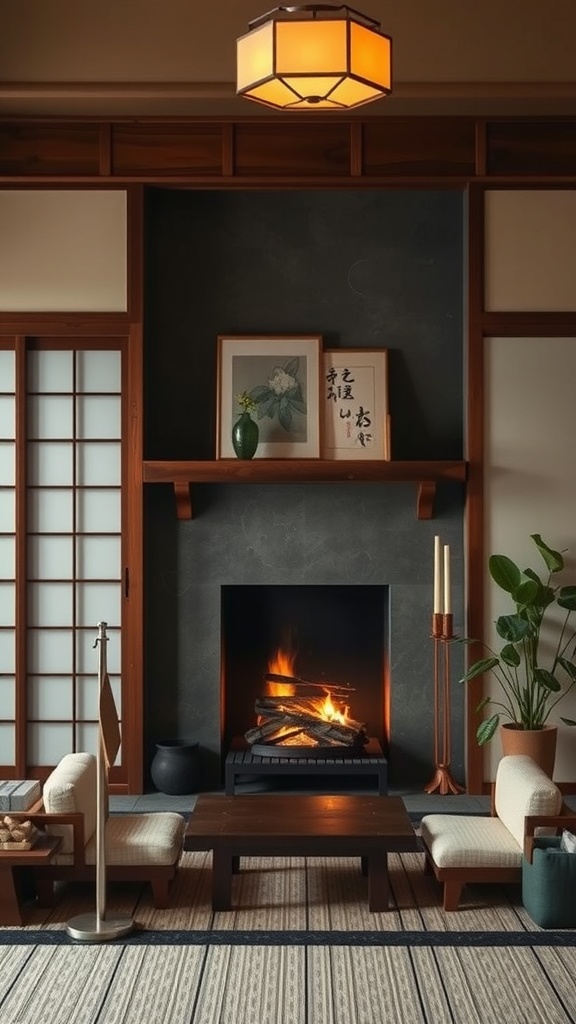
A fireplace can be a stunning centerpiece in a Japanese living room. It adds warmth and comfort, making the space inviting. The image shows a beautifully designed fireplace that fits perfectly within a traditional setting.
The dark stone backdrop contrasts nicely with the wooden elements around it. This combination creates a cozy atmosphere. The flames flickering in the fireplace invite relaxation and conversation.
Seating is arranged thoughtfully, with simple yet comfortable chairs facing the fire. A low wooden table sits in the center, perfect for tea or snacks. The overall layout encourages gatherings with family and friends.
Decorative elements, like the framed art and plants, enhance the room’s charm. They add a touch of nature and culture, which is essential in Japanese design. Using natural materials helps to connect the indoors with the outdoors.
Incorporating a fireplace not only provides warmth but also creates a focal point that draws people together. It’s a great way to embrace the essence of Japanese living while enjoying the comfort of home.
Incorporating Vintage Finds for Character
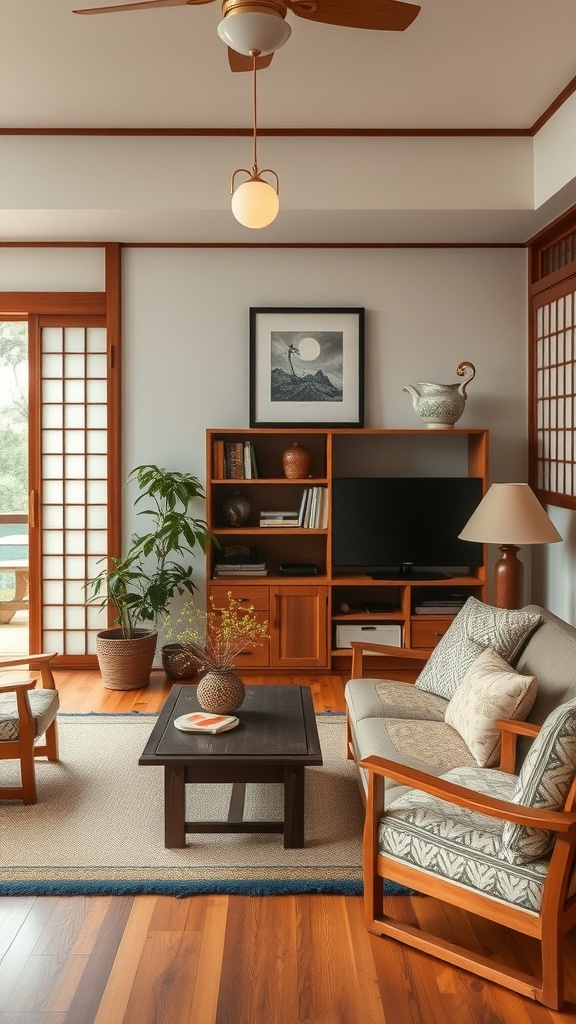
Adding vintage pieces to your Japanese living room can bring a unique charm and personality to the space. The image showcases a cozy living room with wooden accents and a blend of modern and vintage elements. The warm tones of the wooden furniture create a welcoming atmosphere.
Look at the coffee table and the patterned cushions; they tell a story. Vintage items, like the decorative vase and the artwork on the wall, can serve as conversation starters. They add depth and history to your decor.
Consider visiting local thrift stores or flea markets to find treasures that resonate with you. A vintage lamp or an old book can enhance the character of your living room. Mixing these finds with contemporary pieces creates a balanced look that feels both fresh and timeless.
Don’t shy away from displaying your vintage finds. They can be the focal points of your room. A well-placed antique can draw the eye and make your space feel lived-in and loved. Embrace the beauty of imperfections that come with age, and let your personality shine through your decor choices.
Using Mirrors to Enhance Light
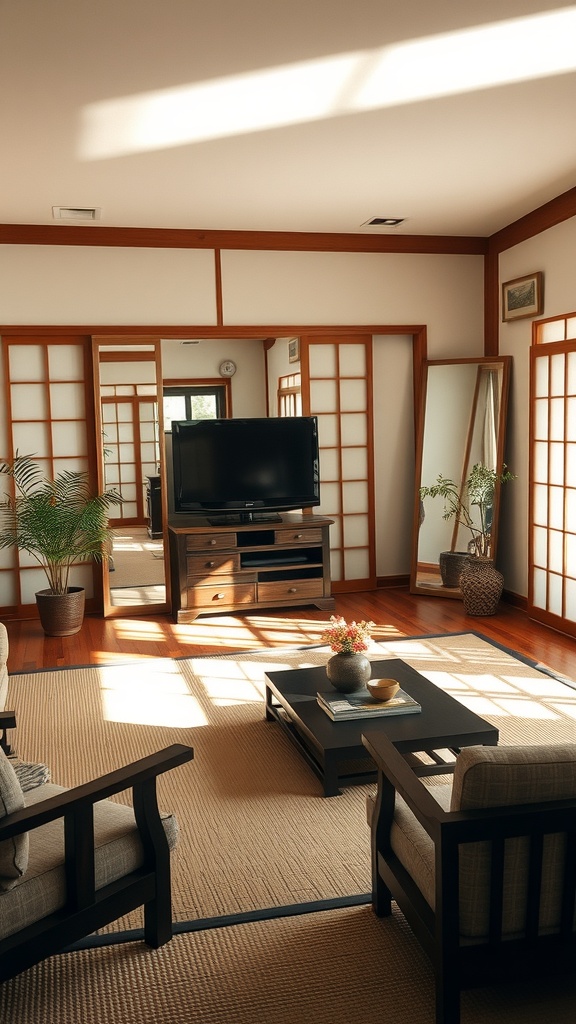
Mirrors can work wonders in a Japanese living room. They reflect light, making the space feel brighter and more open. In the image, you can see how the mirrors are strategically placed to catch natural light. This creates a warm and inviting atmosphere.
Incorporating mirrors into your design can also add depth. The reflections can make the room appear larger than it is. Notice how the mirrors complement the wooden elements and soft colors in the room. This balance is key to achieving a serene look.
When choosing mirrors, consider their shape and size. A large, simple mirror can serve as a focal point. Smaller mirrors can be grouped together for a unique display. Either way, they enhance the overall aesthetic while maximizing light.
Don’t forget about placement! Position mirrors across from windows or light sources to maximize their effect. This simple trick can transform your living space into a bright and airy retreat.
Utilizing Built-In Shelving for Organization
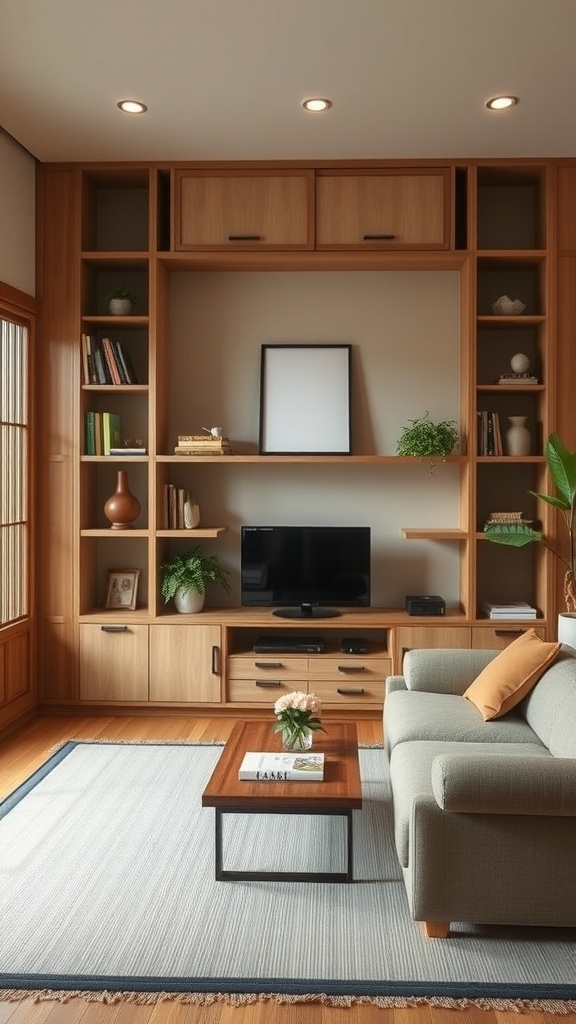
Built-in shelving can be a fantastic way to keep your Japanese living room organized. The image shows a sleek, wooden shelving unit that blends seamlessly with the room’s design. This type of shelving not only provides storage but also adds a touch of elegance.
In the picture, you can see books, plants, and decorative items neatly arranged. This creates a cozy and inviting atmosphere. The open shelves allow for easy access to your favorite books while showcasing personal touches like plants and art.
Using built-in shelving helps maximize space, especially in smaller rooms. You can store items out of sight in the cabinets below while keeping frequently used items within reach. This balance of functionality and style is key in Japanese interior design.
Consider what you want to display and how it reflects your personality. Mixing books with decorative pieces can create visual interest. Remember, the goal is to maintain a clean and organized look while making the space feel warm and welcoming.
Creating a Multi-Functional Space
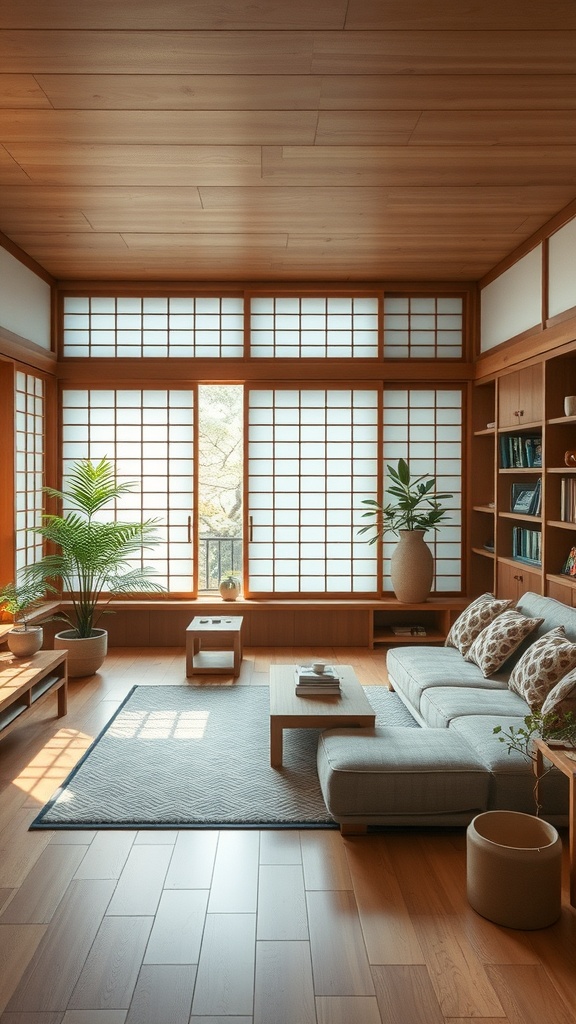
In a Japanese living room, the idea of multi-functionality shines through. This space is not just for lounging; it’s designed for relaxation, work, and socializing.
The clean lines and natural materials create a calm environment. The large windows let in plenty of light, making the room feel open and inviting. Plants add a touch of nature, enhancing the overall vibe.
The furniture is arranged thoughtfully. A cozy sofa invites you to sit and unwind, while a low table serves as a perfect spot for tea or a game night. This setup encourages interaction and connection.
Storage solutions blend seamlessly into the design. Shelves hold books and decorative items without cluttering the space. This keeps everything organized and accessible, making it easy to switch from a quiet reading nook to a lively gathering place.
Incorporating elements like tatami mats or sliding doors can further enhance the room’s versatility. These features allow you to adapt the space for different activities, whether it’s a yoga session or a family dinner.
Using Natural Fabrics for Upholstery
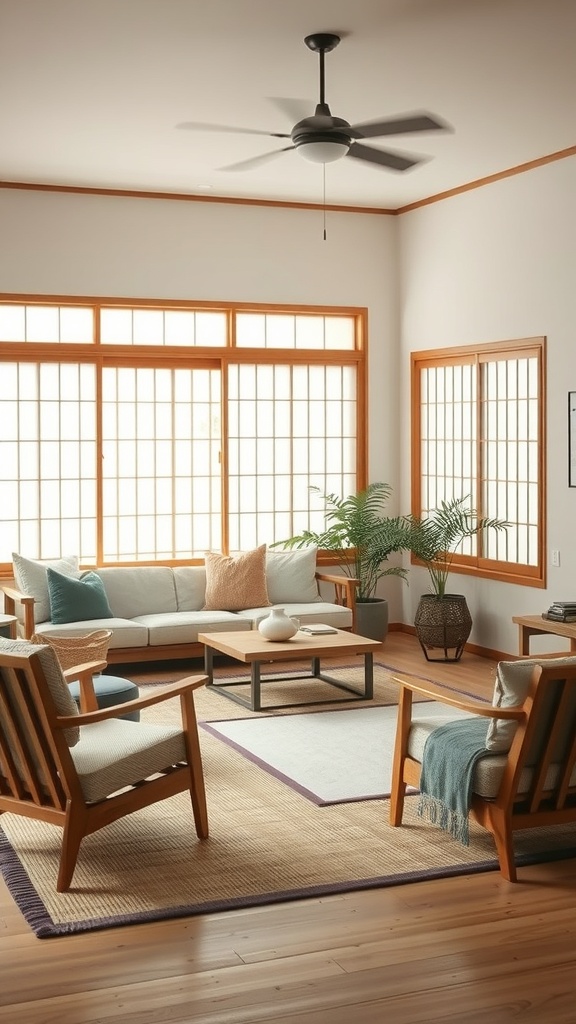
In a Japanese living room, natural fabrics play a key role in creating a cozy and inviting atmosphere. The image showcases a serene space filled with light, featuring a comfortable sofa adorned with soft cushions. The use of natural textiles, like cotton and linen, adds warmth and texture to the room.
The wooden furniture complements the upholstery beautifully, enhancing the overall aesthetic. The earthy tones of the cushions and the rug tie everything together, making the space feel harmonious. Natural fabrics not only look great but also offer comfort, making them perfect for lounging and relaxation.
Incorporating plants into the design, as seen in the corner, brings a touch of nature indoors. This connection to the outdoors is essential in Japanese design, promoting a sense of peace and tranquility. Choosing natural fabrics for upholstery can transform your living room into a serene retreat.
Incorporating a Wall of Windows for Scenic Views
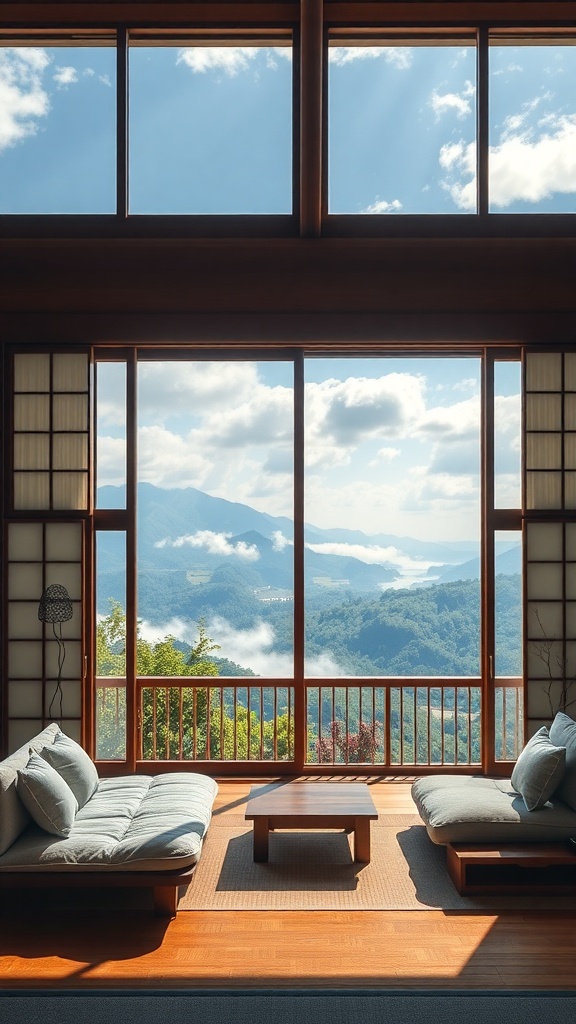
A wall of windows can transform a Japanese living room into a serene retreat. Imagine sitting in a cozy space, surrounded by nature’s beauty. The large windows invite the outside in, allowing natural light to flood the room. This design choice not only enhances the aesthetic but also creates a calming atmosphere.
In the image, you can see a stunning view of mountains and clouds. This kind of scenery can be a daily reminder of the beauty of the world outside. The wooden frames of the windows complement the traditional Japanese style, blending seamlessly with the interior decor.
Choosing the right window placement is key. Positioning them to frame specific views can make the room feel more connected to nature. You can enjoy the changing seasons right from your living room. This connection to the outdoors is a hallmark of Japanese design, promoting tranquility and mindfulness.
To complete the look, consider using natural materials for furniture and decor. Soft cushions and a low table create a welcoming space for relaxation or social gatherings. With the right setup, your living room can become a peaceful haven, perfect for unwinding after a long day.
Creating a Warm Ambiance with Candlelight
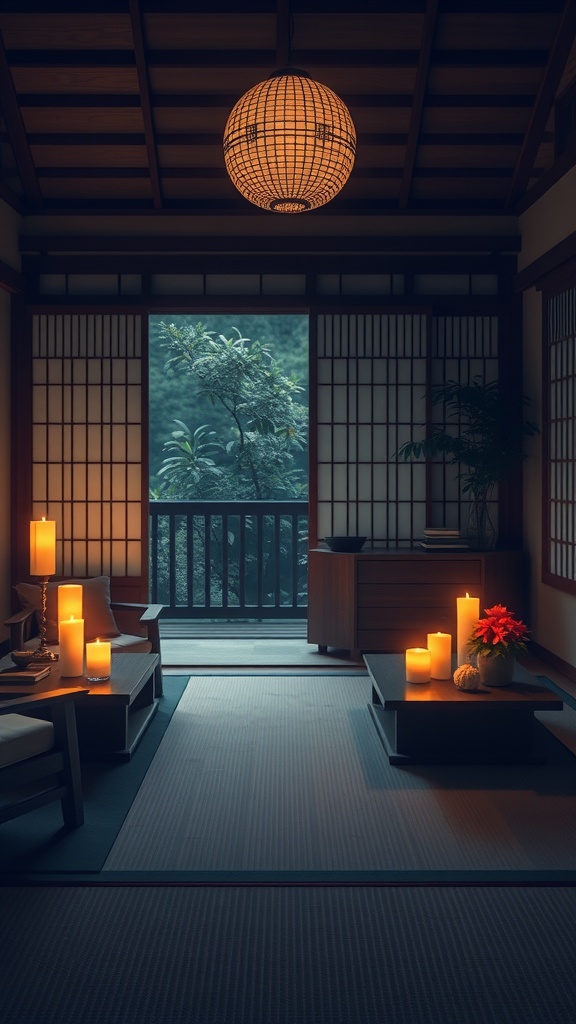
Candlelight can transform any space, and in a Japanese living room, it adds a special touch. Imagine a cozy room with soft, flickering lights that create a serene atmosphere. The warm glow from candles enhances the natural beauty of the room, making it feel inviting and peaceful.
In the image, you can see candles arranged thoughtfully on low tables. Their soft light complements the wooden features and traditional decor. This setup encourages relaxation and conversation, perfect for unwinding after a long day.
Using candles in your Japanese living room can also highlight other elements, like plants or artwork. The contrast between the candlelight and the natural materials creates a harmonious balance. Consider different candle sizes and shapes to add variety and interest.
To enhance the experience, you might want to pair candlelight with soft music or the sound of nature. This combination can elevate your space into a true retreat, where you can enjoy quiet moments or share time with loved ones.
Incorporating Cultural Symbols in Decor
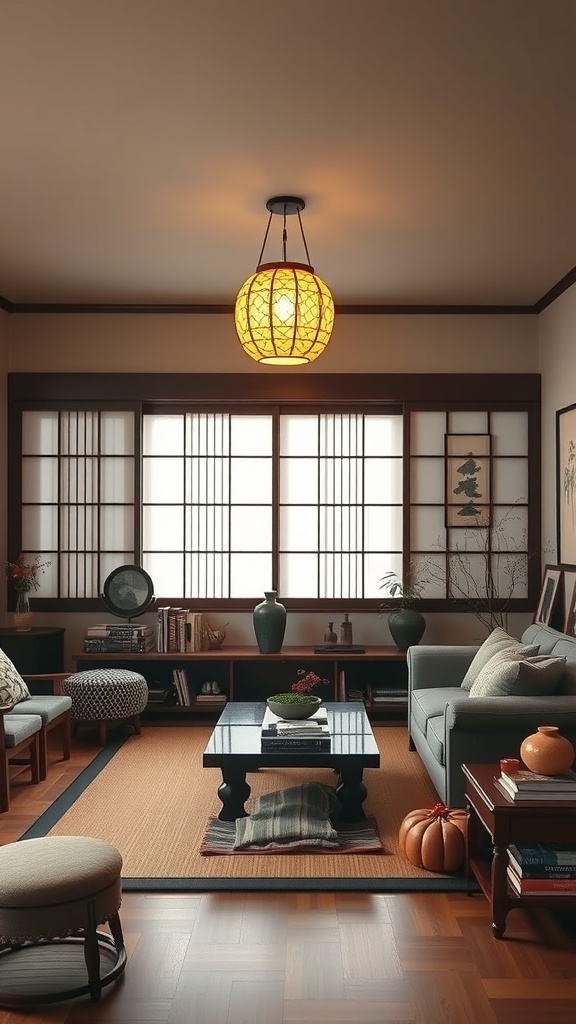
Creating a Japanese living room can be a delightful experience. The image showcases a serene space filled with cultural symbols that reflect Japanese aesthetics. The soft lighting from the lantern creates a warm atmosphere, inviting relaxation.
The use of natural materials is key. The wooden furniture and tatami mat add a traditional touch. You can see decorative elements like vases and art pieces that highlight Japanese craftsmanship. These details bring a sense of harmony and balance to the room.
Plants and simple decor pieces, like the small pumpkin, add life without overwhelming the space. This minimalist approach is central to Japanese design, focusing on simplicity and functionality. Incorporating these elements can transform your living room into a peaceful retreat.
Creating a Peaceful Atmosphere with Soft Textures
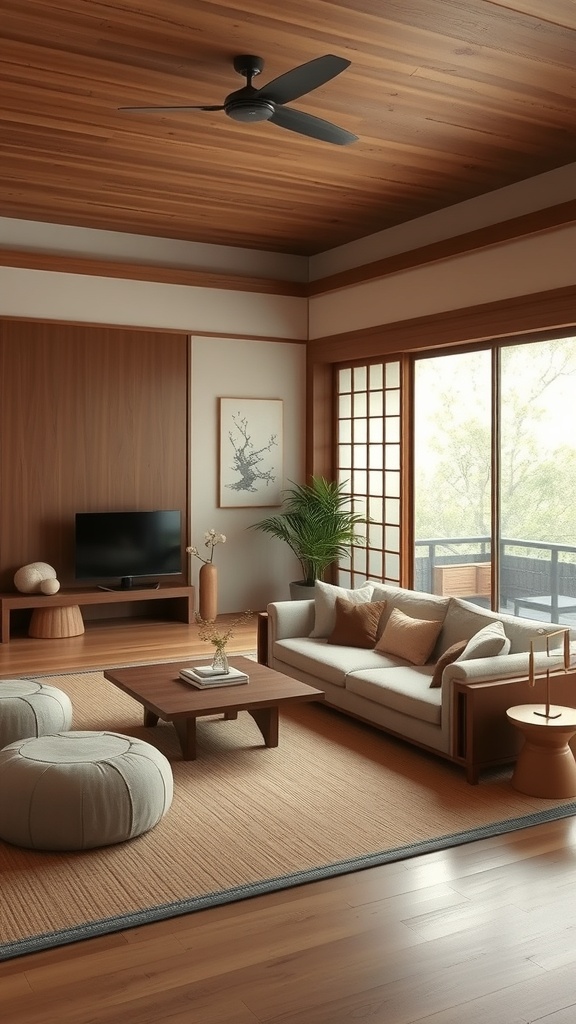
In a Japanese living room, soft textures play a key role in creating a serene environment. The image showcases a cozy space with a warm wooden ceiling and smooth, natural materials. The light colors of the furniture and decor invite calmness, making it an ideal spot for relaxation.
The low seating, like the round poufs and the comfortable sofa, encourages a laid-back vibe. These elements are perfect for unwinding after a long day. The soft rug underfoot adds an extra layer of comfort, making the space feel inviting.
Natural light floods in through the large windows, connecting the indoors with the outdoors. This connection enhances the peaceful atmosphere, allowing you to enjoy the beauty of nature right from your living room. Incorporating plants, as seen in the image, brings life and freshness to the space.
Overall, the combination of soft textures and natural elements creates a harmonious setting. This is a perfect example of how to design a Japanese living room that feels both tranquil and welcoming.
Using Natural Stone for a Rustic Touch
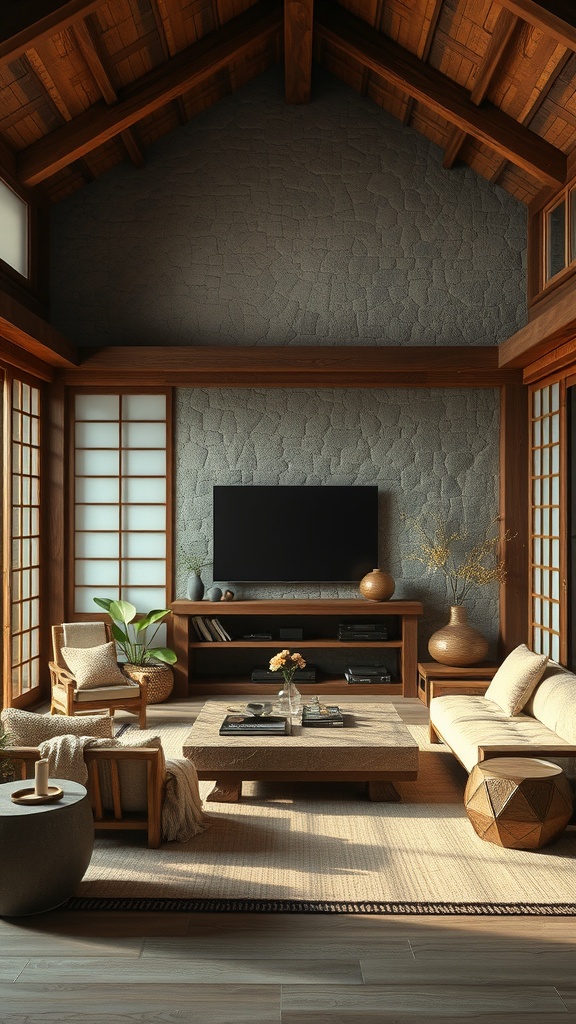
Natural stone can add a warm, rustic feel to any Japanese living room. In the image, the textured stone wall creates a stunning backdrop that enhances the overall design. The earthy tones of the stone complement the wooden elements, making the space feel inviting and cozy.
The choice of stone also brings a unique character to the room. Each stone has its own pattern and color, which adds depth and interest. This natural look pairs beautifully with traditional Japanese furniture, like the low wooden table and comfortable seating.
Incorporating stone into your living room design can be simple. You might consider a stone feature wall or even stone accents in furniture. The key is to keep it balanced with other materials, such as wood and textiles, to maintain a harmonious atmosphere.
Plants, like the ones shown, can further soften the look, bringing a touch of nature indoors. This combination of stone, wood, and greenery creates a serene space perfect for relaxation.
Utilizing Colorful Accents for Visual Interest
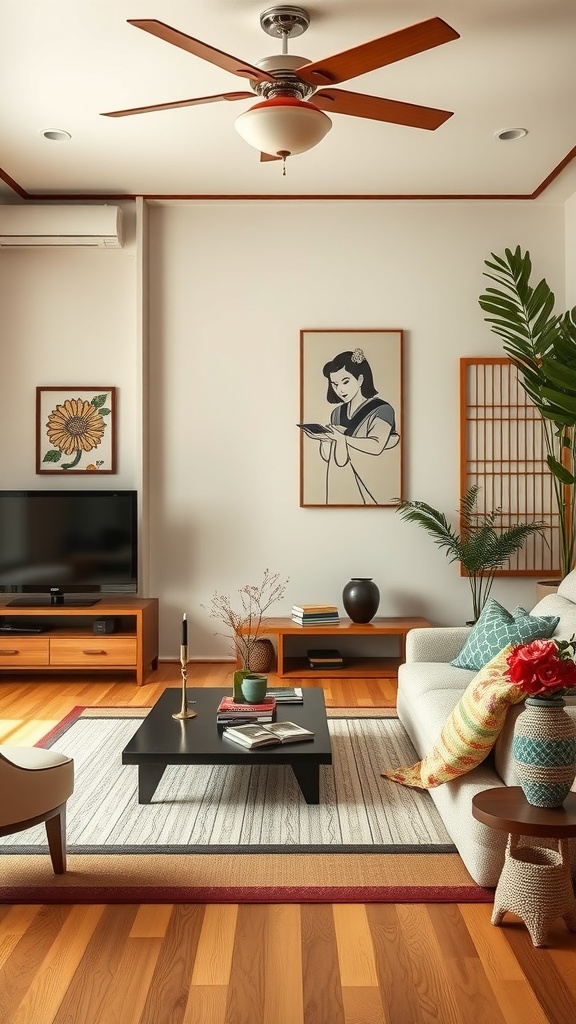
In a Japanese living room, colorful accents can really bring the space to life. This image showcases a cozy setting with a mix of neutral tones and vibrant pops of color. The soft beige sofa is complemented by bright cushions that add a cheerful touch.
The artwork on the walls, featuring a sunflower and a graceful figure, adds character and a hint of culture. These pieces serve as focal points, drawing the eye and sparking conversation. The use of natural materials, like wood and plants, enhances the warm feel of the room.
On the coffee table, a simple arrangement of books and a small plant adds a touch of greenery. This not only brightens the space but also creates a calming atmosphere. The overall design is a perfect blend of traditional and modern elements, making it inviting and stylish.
Incorporating a Reading Area with Bookshelves
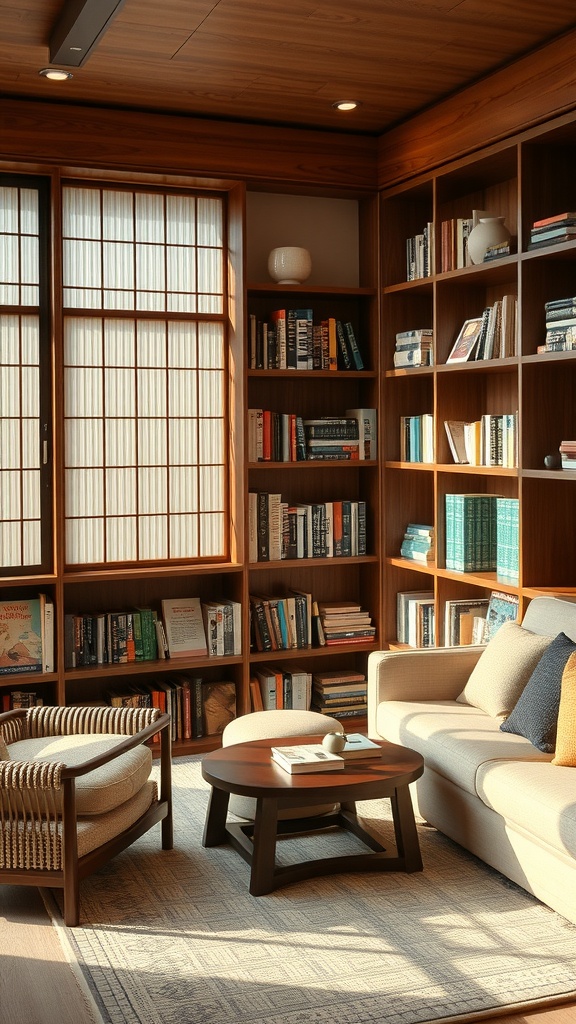
A cozy reading area can transform your Japanese living room into a peaceful retreat. The image showcases a beautifully designed space that highlights this concept perfectly. The warm wood tones and natural light create a welcoming atmosphere.
The bookshelves are a key feature, filled with a variety of books that invite you to explore different worlds. They are not just functional; they also add character to the room. The arrangement of books, along with decorative items, makes the shelves visually appealing.
The seating area is thoughtfully arranged for comfort. A plush sofa and a stylish armchair provide the perfect spots to curl up with a good book. The round coffee table adds a nice touch, making it easy to set down your drink or a stack of books.
Natural light streaming through the window enhances the reading experience. The shoji-style window adds a traditional touch, allowing soft light to filter in while maintaining privacy. This balance of light and design creates an inviting nook for reading.
Incorporating a reading area like this can make your living room a favorite spot in your home. It encourages relaxation and offers a perfect escape from daily life.
Utilizing Geometric Patterns for Modern Flair
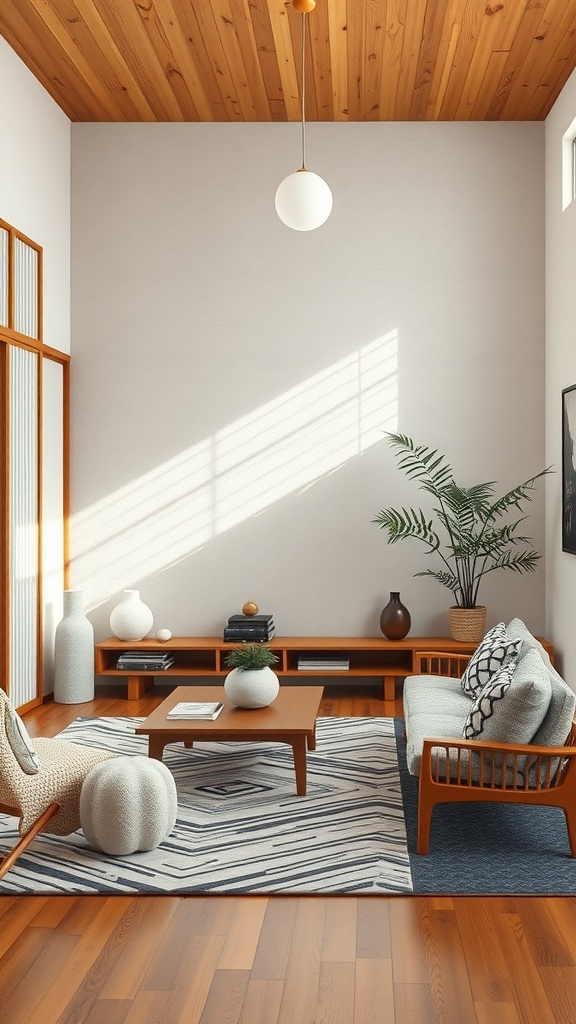
Geometric patterns can bring a fresh, modern touch to any Japanese living room. In the image, you can see a beautiful blend of shapes and textures that create a harmonious space. The rug features striking zigzag patterns, which add visual interest without overwhelming the room.
The furniture choices are equally thoughtful. The coffee table, with its clean lines, complements the geometric theme. Soft, round accents like the poufs and vases balance the sharp angles, making the space feel inviting.
Natural elements, such as the plant and wooden ceiling, enhance the overall aesthetic. They connect the modern design with traditional Japanese principles of nature and simplicity. This combination of geometric patterns and organic materials creates a cozy yet stylish atmosphere.
Creating a Welcoming Entryway
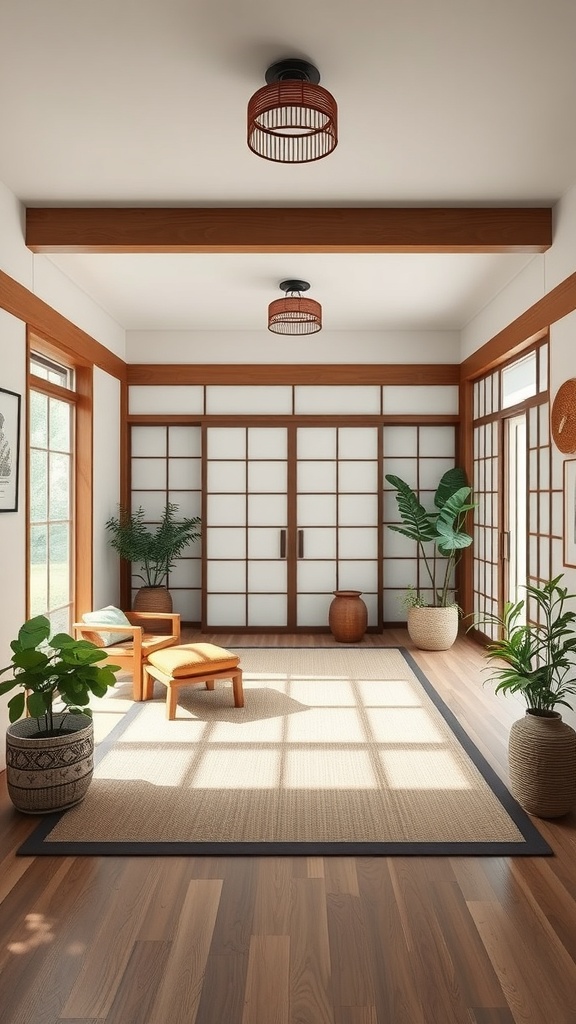
When stepping into a Japanese-inspired living space, the entryway sets the tone for the entire home. This area often features clean lines and natural materials, creating a serene atmosphere. The use of shoji screens allows light to filter through, providing a soft glow that invites you in.
In the image, you can see a bright and airy entryway with wooden beams and stylish lighting. The warm tones of the wood contrast beautifully with the light walls, enhancing the welcoming feel. A simple yet comfortable chair and a few potted plants add a touch of nature, making the space feel alive.
Rugs made from natural fibers, like the one shown, can ground the space while adding texture. This combination of elements creates a calm and inviting entryway, perfect for greeting guests or simply enjoying a moment of peace before entering the rest of the home.