Modern Japanese gardens blend simplicity with elegance, creating serene spaces that invite relaxation and reflection. Drawing inspiration from traditional designs, these gardens feature minimalistic layouts, natural materials, and thoughtfully placed elements like water, stones, and plants. They embody a harmonious relationship between nature and human creativity, making them perfect for anyone looking to cultivate a peaceful retreat in their own home.
Integrating Modern Art
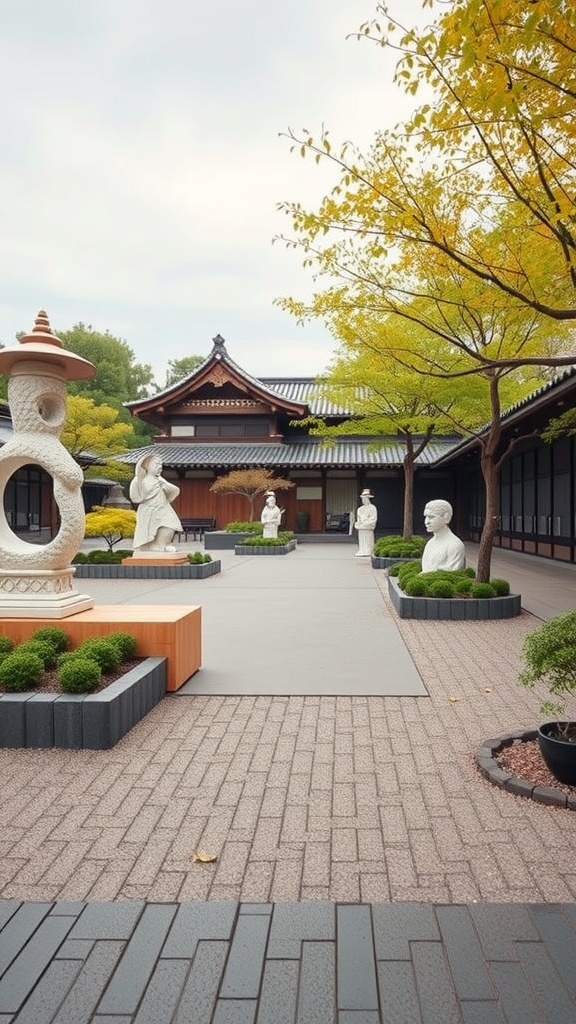
Modern Japanese gardens blend tradition with contemporary art, creating a unique experience. This image showcases a serene space where classic elements meet modern sculptures. The clean lines of the pathways and the arrangement of greenery complement the artistic pieces beautifully.
The statues in the garden stand as focal points, inviting visitors to pause and reflect. Each piece adds character, enhancing the overall aesthetic. The contrast between the natural surroundings and the man-made art creates a dialogue that is both calming and thought-provoking.
Bright yellow leaves hint at the changing seasons, reminding us of nature’s cycles. The balance of color and form in this garden illustrates how modern art can harmonize with traditional landscapes. It’s a perfect example of how creativity can flourish in a peaceful setting.
Principles of Zen Design
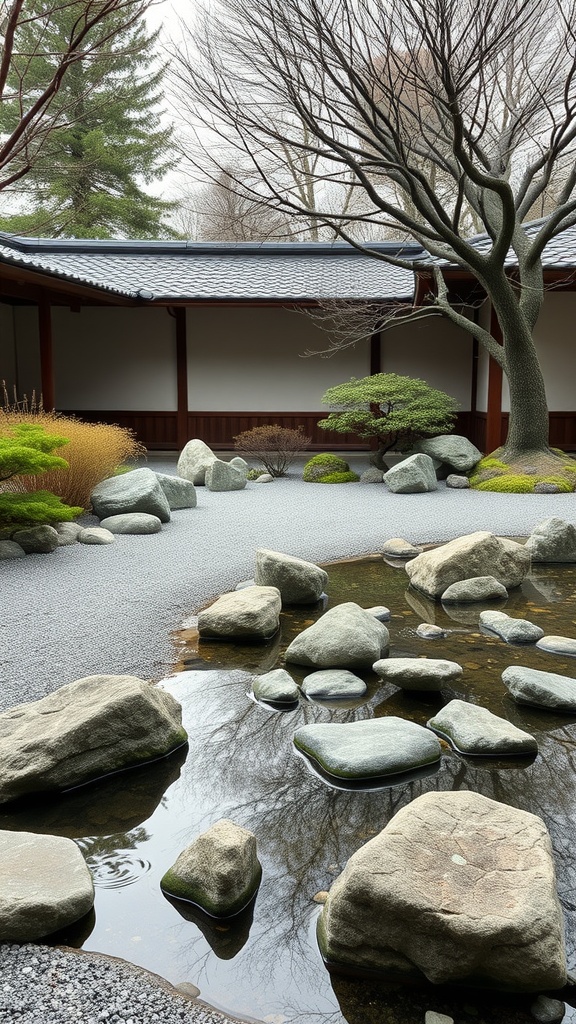
Zen design in Japanese gardens focuses on simplicity and harmony. The image showcases a serene space with carefully placed rocks and plants. Each element is chosen to create balance and tranquility.
The rocks in the garden symbolize mountains or islands. They are arranged thoughtfully to guide the eye and encourage contemplation. The water reflects the surrounding beauty, adding a sense of calm.
Plants like the small tree and shrubs bring life to the scene. Their shapes and colors complement the stones, enhancing the overall aesthetic. The gravel pathways invite visitors to stroll and connect with nature.
Overall, this garden embodies the principles of Zen design: simplicity, natural beauty, and a peaceful atmosphere. It’s a perfect spot for reflection and relaxation.
Creating Pathways and Walkways
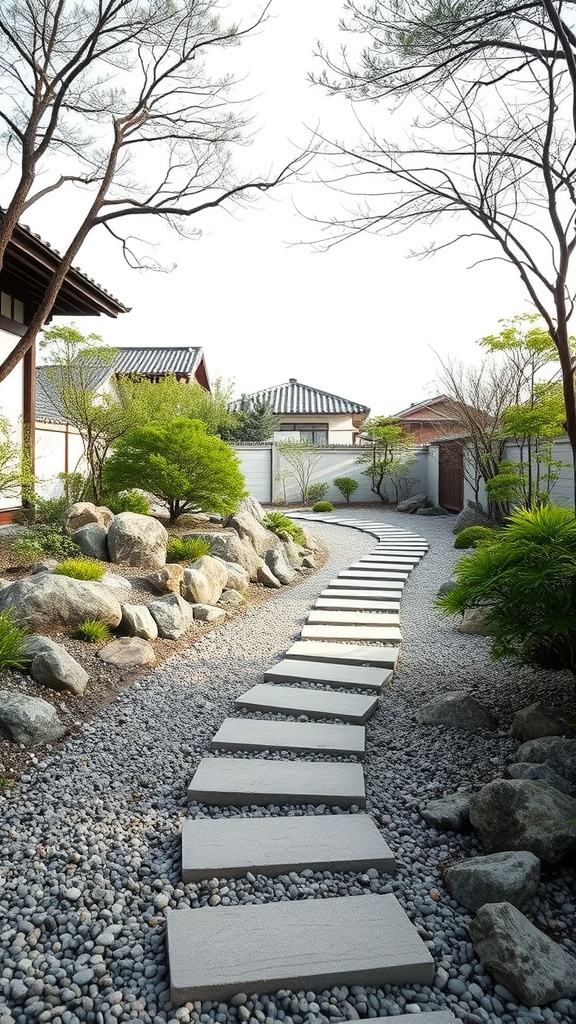
Pathways and walkways are essential in a modern Japanese garden. They guide visitors through the space, creating a sense of flow and exploration. The image shows a beautifully designed path made of stone slabs, leading through a serene landscape.
The gentle curves of the walkway invite you to wander and discover different areas of the garden. This design choice not only enhances the visual appeal but also encourages a leisurely pace, allowing you to take in the beauty around you.
Surrounded by carefully placed rocks and lush greenery, the path blends seamlessly with nature. The use of gravel adds texture and contrast, making the walkway stand out while still feeling integrated into the environment.
Creating pathways in your garden can be a fun project. Consider using natural materials like stone or wood to maintain that organic feel. Think about how you want people to move through your space and let that guide your design choices.
Choosing the Right Plants
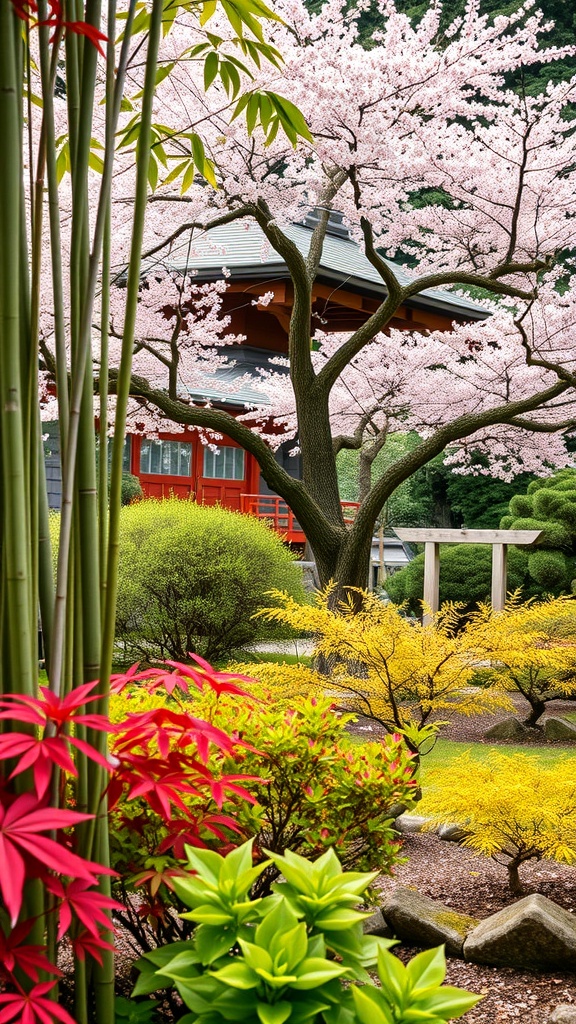
Creating a modern Japanese garden is all about harmony and balance. The image showcases a beautiful blend of colors and textures, featuring cherry blossoms, bamboo, and vibrant foliage. Each plant plays a role in crafting a serene atmosphere.
Start with iconic plants like cherry trees. Their stunning pink blooms add a pop of color in spring. Bamboo is another essential choice. It brings height and elegance while creating a natural screen. The lush green leaves sway gently, adding movement to the garden.
Consider incorporating colorful shrubs, like the red and yellow foliage seen in the image. These plants provide visual interest throughout the seasons. Ground cover plants can fill in spaces and add layers to the design. Look for varieties that thrive in your climate.
Don’t forget about the layout. Group plants in odd numbers for a more natural look. Mix heights and textures to create depth. With the right selection, your garden can become a peaceful retreat that reflects the beauty of nature.
Incorporating Water Features
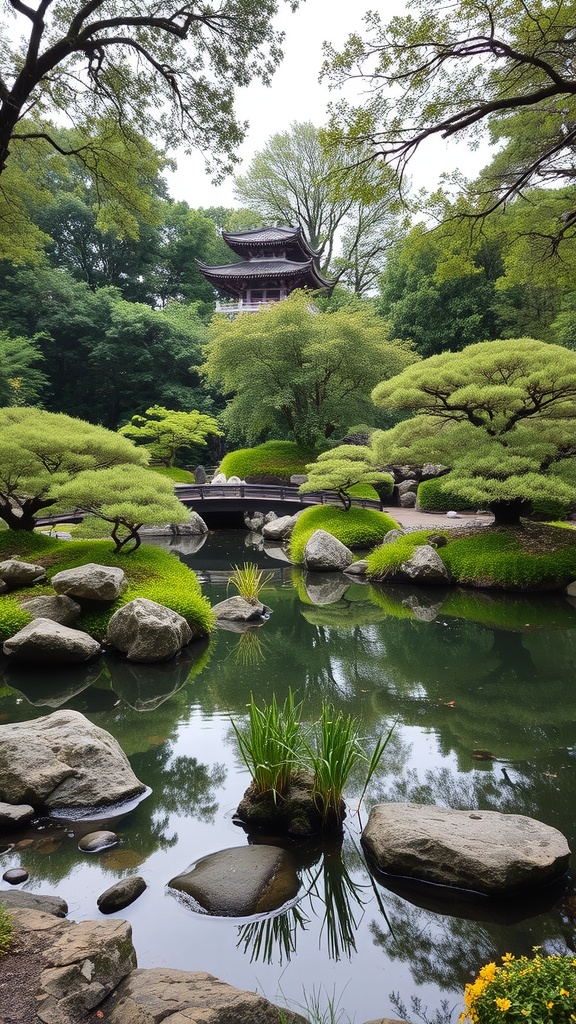
Water features are a key element in modern Japanese gardens. They bring a sense of tranquility and balance to the landscape. In the image, a serene pond reflects the lush greenery surrounding it. This creates a peaceful atmosphere that invites relaxation.
The pond is not just for looks; it serves as a habitat for various wildlife. Fish and frogs can thrive in this environment, adding life to the garden. The gentle sound of water can also enhance the overall experience, making it a perfect spot for meditation or quiet reflection.
Bridges, like the one seen in the image, often connect different areas of the garden. They symbolize the journey between different realms, adding a layer of meaning to the design. Walking across a bridge can feel like stepping into a different world, surrounded by nature’s beauty.
Incorporating stones and plants around the water helps create a natural look. The rocks provide texture, while the greenery softens the edges. This combination is essential in achieving the harmony that defines a Japanese garden.
Symbolism in Garden Elements
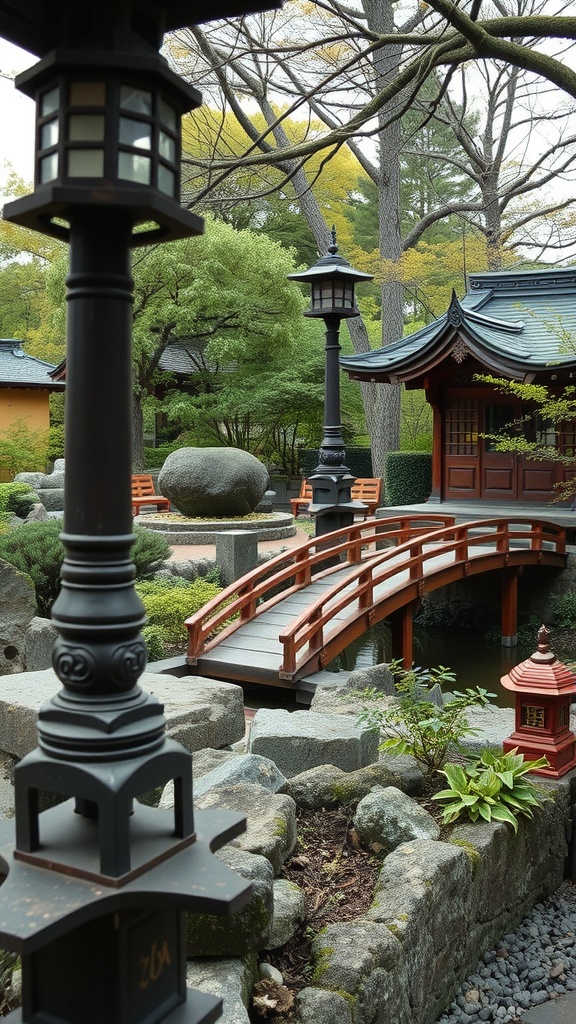
In a modern Japanese garden, every element carries meaning. The carefully placed stones, for instance, symbolize mountains or islands, representing stability and permanence. These stones are often arranged in a way that mimics natural landscapes, inviting visitors to reflect on the beauty of nature.
The wooden bridge in the image serves as a connection between different areas of the garden. It symbolizes the journey of life, encouraging visitors to cross from one experience to another. Walking over the bridge can feel like moving from the mundane to a tranquil space.
Lanterns, like the ones seen here, are more than just sources of light. They represent guidance and enlightenment. Traditionally, they were used to light paths during evening strolls, symbolizing the way forward in life.
Plants and trees also play a vital role in this symbolism. The greenery offers a sense of renewal and growth, reminding us of the cycles of life. Each season brings a new perspective, from the vibrant blossoms of spring to the serene stillness of winter.
The Role of Rocks and Gravel
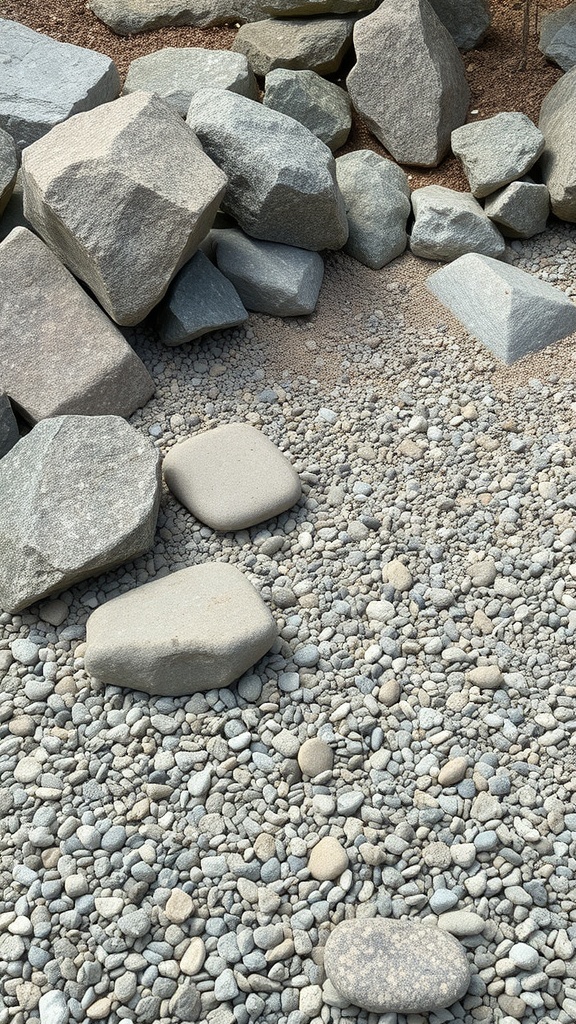
Rocks and gravel play a key role in modern Japanese gardens. They create a natural look that feels both calming and balanced. In the image, you can see a mix of different stone sizes and shapes, which adds texture and interest to the space.
The larger rocks often symbolize mountains or islands, while the smaller gravel represents water. This contrast helps to create a sense of harmony. The smooth stones, like the ones in the foreground, invite touch and interaction, making the garden feel more inviting.
Gravel paths are common in these gardens, guiding visitors through the landscape. The sound of gravel crunching underfoot adds to the sensory experience. It encourages a slower pace, allowing for reflection and appreciation of the surroundings.
Overall, rocks and gravel are not just decorative; they serve a purpose in enhancing the beauty and tranquility of a Japanese garden.
Seasonal Changes and Their Impact
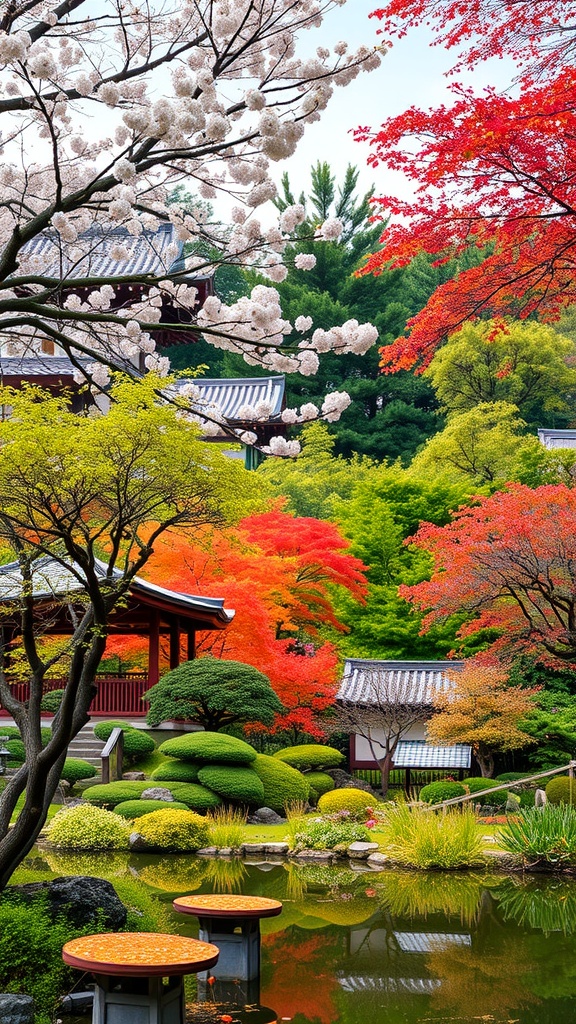
Modern Japanese gardens are a stunning showcase of nature’s beauty, especially when the seasons change. In spring, cherry blossoms burst into bloom, creating a soft pink canopy. This is a time of renewal, where the garden feels alive with color and fragrance.
As summer rolls in, lush greens dominate the landscape. The vibrant foliage provides a cool retreat from the heat. The stillness of the water reflects the surrounding greenery, making it a perfect spot for relaxation.
When autumn arrives, the garden transforms into a canvas of fiery reds, oranges, and yellows. The maple trees stand out, their leaves creating a warm glow. This season invites visitors to appreciate the beauty of change.
Winter brings a serene quietness. The garden, often dusted with snow, offers a peaceful escape. The bare branches of trees reveal their structure, showcasing the garden’s design in a new light. Each season in a Japanese garden tells a story, reminding us of nature’s cycles.
Lighting and Atmosphere
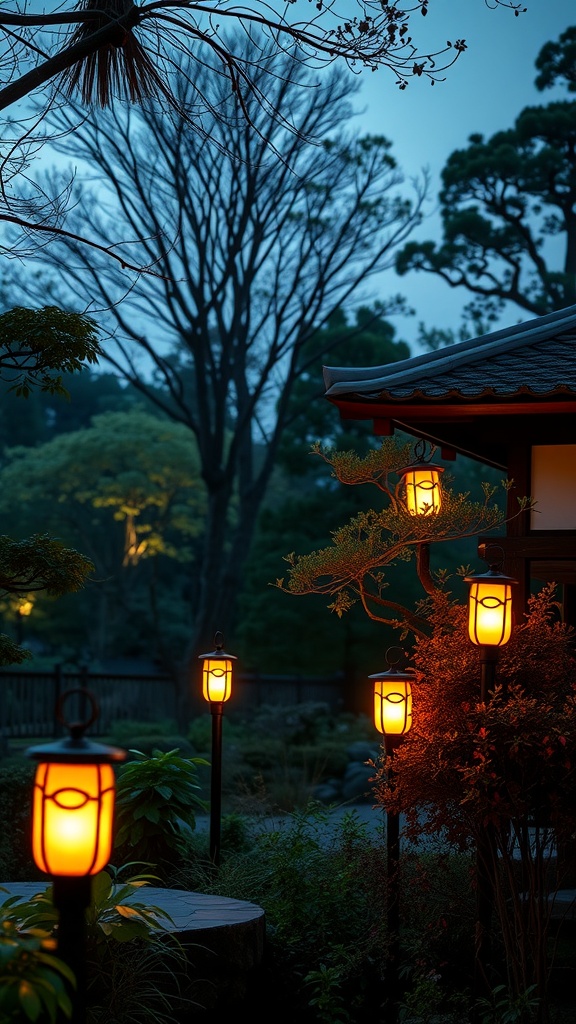
In a modern Japanese garden, lighting plays a key role in creating a serene atmosphere. The soft glow from lanterns adds warmth and charm, inviting visitors to explore the space even as dusk falls.
As you wander through the garden, the gentle illumination highlights the natural beauty of the plants and trees. The contrast between the darkening sky and the warm lights creates a peaceful setting, perfect for reflection or relaxation.
These lanterns not only serve a practical purpose but also enhance the garden’s aesthetic. They guide the way along paths, making it easy to appreciate the carefully arranged flora. The combination of light and shadow adds depth, making every corner feel unique.
At night, the garden transforms into a magical space. The interplay of light and nature encourages a sense of tranquility. Whether you’re enjoying a quiet moment or sharing the experience with friends, the atmosphere is simply enchanting.
Incorporating Japanese Architecture
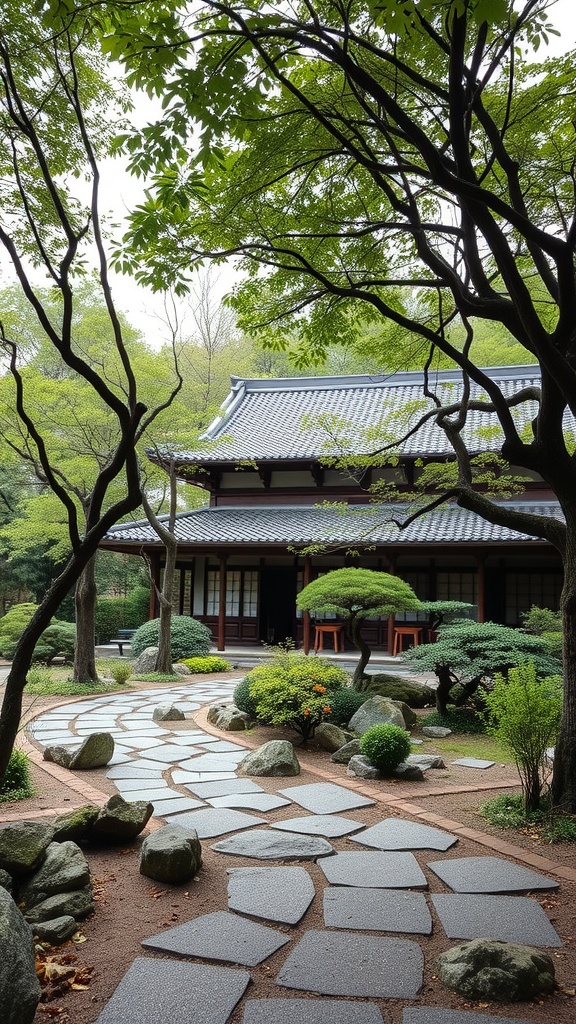
Japanese architecture blends beautifully with nature, creating a serene atmosphere. The image shows a traditional Japanese house surrounded by lush greenery. The roof features distinctive tiles, which are a hallmark of this style.
The path leading to the house is made of flat stones, guiding visitors through the garden. This design encourages a slow, mindful stroll, allowing one to appreciate the surroundings. The carefully placed rocks and plants enhance the natural beauty, making the space feel harmonious.
Large trees frame the scene, providing shade and a sense of enclosure. The overall design emphasizes simplicity and balance, key principles in Japanese architecture. This approach creates a peaceful retreat, perfect for relaxation and reflection.
Creating a Tea Garden
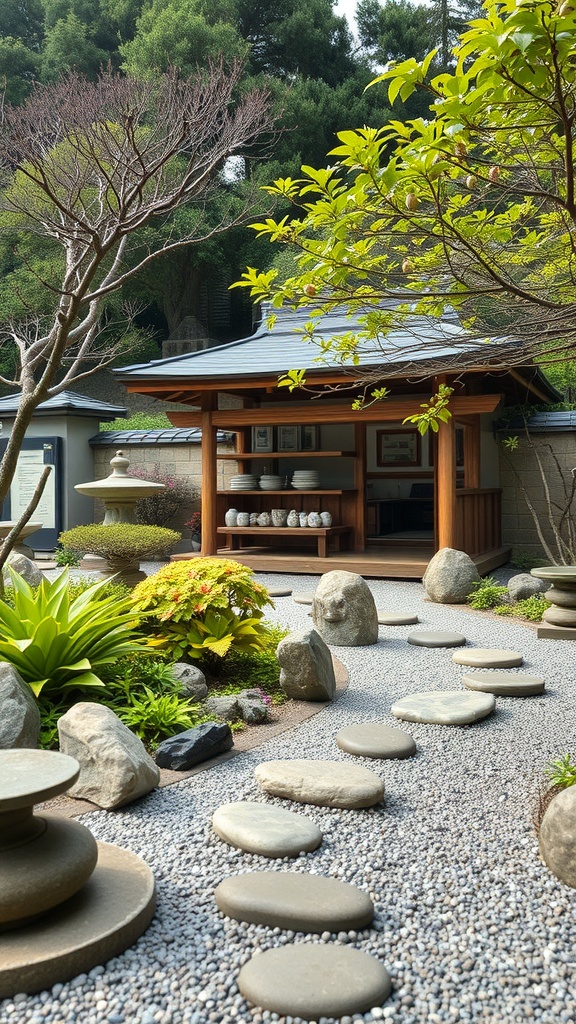
A tea garden is a peaceful spot that invites relaxation and reflection. The image shows a lovely setup with a traditional tea house, surrounded by carefully arranged stones and greenery. The soft curves of the stepping stones lead the way, making it easy to wander through the space.
The tea house itself is a focal point, blending seamlessly with the natural surroundings. It’s a place where you can enjoy a cup of tea while soaking in the beauty of the garden. The gentle colors of the plants and the textures of the stones create a calming atmosphere.
To create your own tea garden, start by choosing a quiet area in your yard. Incorporate elements like stones, gravel, and plants that thrive in your climate. Consider adding a small structure, like a gazebo or a simple bench, where you can sit and enjoy your tea. This space can be a wonderful escape from the daily grind.
Minimalism in Garden Design
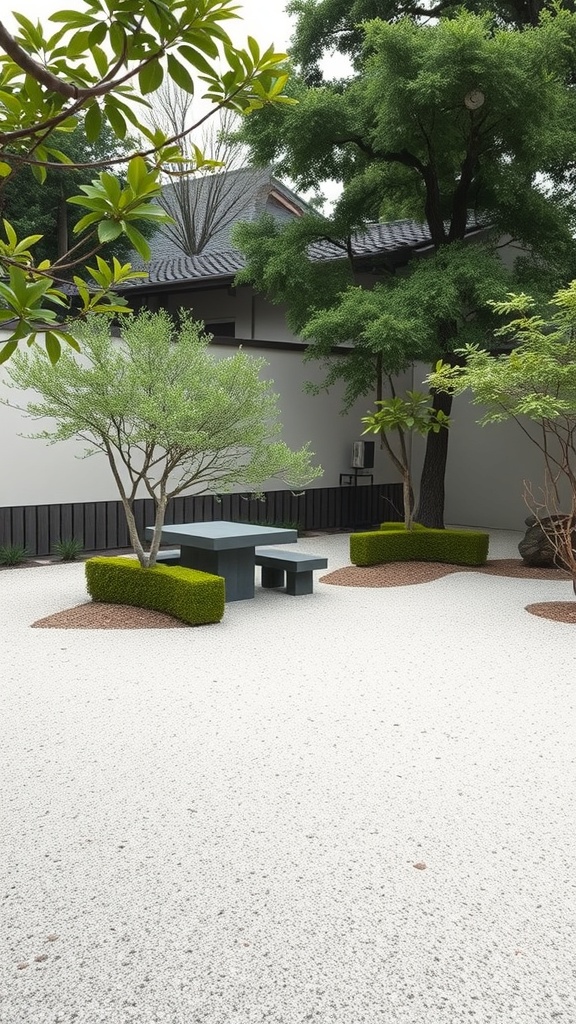
Minimalism in garden design shines brightly in modern Japanese gardens. The image showcases a serene space with clean lines and a simple layout. The white gravel ground creates a calming effect, inviting you to pause and reflect.
The greenery is carefully chosen, with a mix of trees and shrubs that add life without overwhelming the scene. The small, neatly trimmed bushes provide a touch of order, while the larger trees offer shade and texture.
In the center, a simple table and benches encourage relaxation and connection with nature. This minimalist approach allows each element to stand out, creating a harmonious balance. The overall design promotes tranquility, making it a perfect spot for meditation or quiet contemplation.
Modern Japanese gardens embrace the idea that less is more. By focusing on essential elements, they create spaces that feel open and inviting. This design philosophy encourages us to appreciate the beauty of simplicity in our own outdoor spaces.
Bonsai Trees as Focal Points
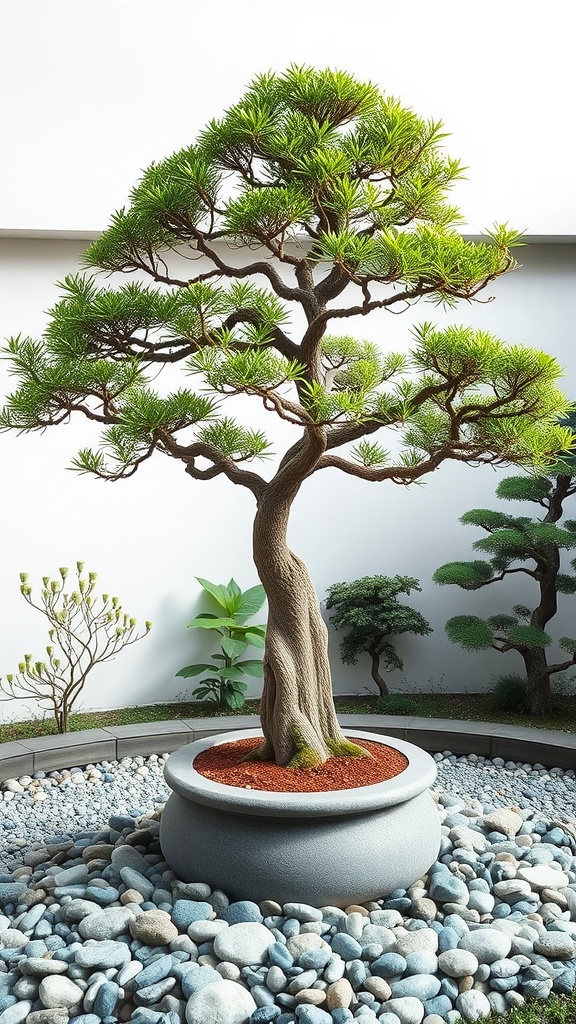
Bonsai trees are more than just plants; they are living art pieces that bring a unique charm to modern Japanese gardens. The image showcases a beautifully shaped bonsai, with its intricate branches and lush green foliage. This tree stands tall, drawing the eye and inviting admiration.
The careful placement of the bonsai in a circular pot surrounded by smooth stones adds to its appeal. The contrast between the tree’s organic lines and the geometric pot creates a striking visual balance. This setup not only highlights the bonsai but also complements the overall garden design.
In a modern Japanese garden, bonsai trees serve as focal points, guiding visitors through the space. They encourage a sense of tranquility and reflection, making them perfect for meditation areas. Each bonsai tells a story, reflecting the care and dedication of its grower.
Wildlife-Friendly Features
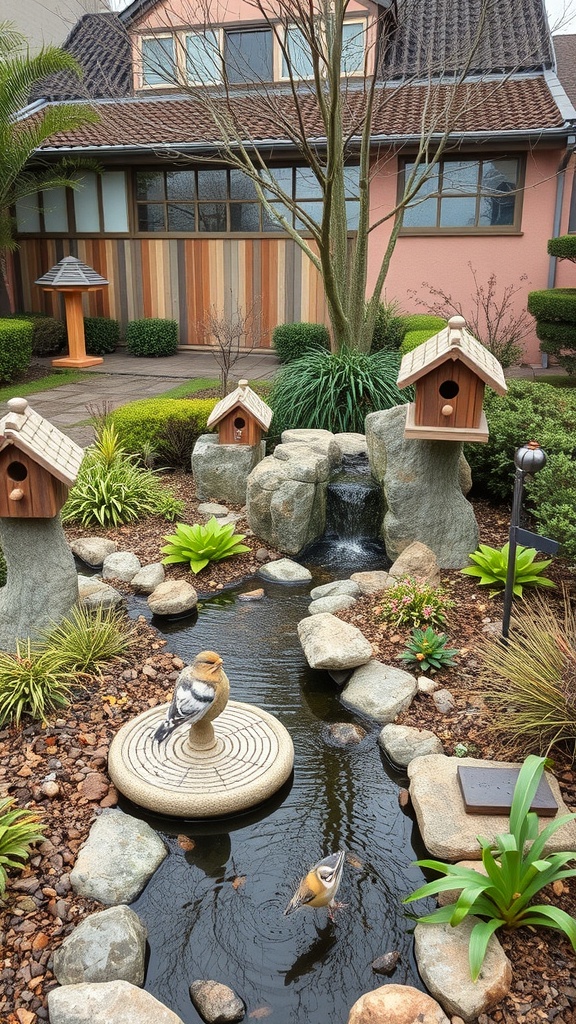
In a modern Japanese garden, creating a welcoming space for wildlife is key. The image showcases a serene pond surrounded by carefully placed rocks and vibrant plants. This setup not only enhances the beauty of the garden but also attracts various birds and other creatures.
The birdhouses in the background are perfect for providing shelter to local birds. They encourage nesting and make the garden a lively spot filled with chirping and fluttering. The gentle sound of water flowing from the small waterfall adds to the peaceful atmosphere, inviting wildlife to visit.
Plants like the lush green foliage and colorful flowers play a vital role too. They offer food and habitat for insects and birds. The combination of water, shelter, and food creates a balanced ecosystem. This thoughtful design not only beautifies the garden but also supports local wildlife, making it a true haven for nature lovers.
Color Schemes and Plant Combinations
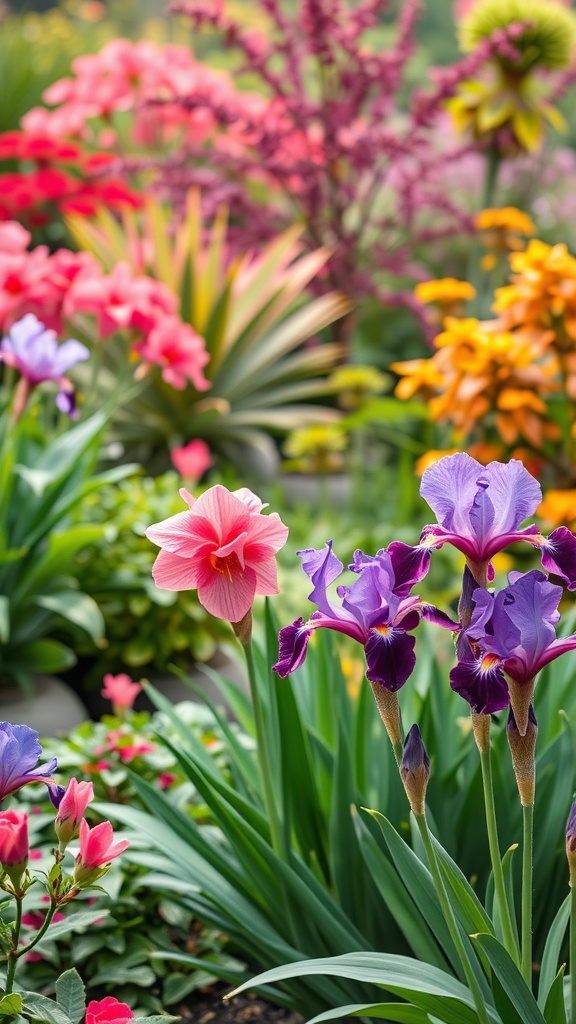
In a modern Japanese garden, color schemes play a vital role in creating a serene atmosphere. The image showcases a vibrant mix of flowers, with pinks, purples, and yellows harmonizing beautifully. This combination brings energy while maintaining a sense of calm.
The pink flowers, likely a type of lily, stand out against the lush green foliage. They add a soft touch, inviting visitors to pause and appreciate their beauty. The deep purple irises add depth and contrast, making the garden feel more dynamic.
Yellow blooms bring warmth and brightness, creating a cheerful vibe. Together, these colors create a balanced palette that feels both lively and peaceful. The careful selection of plants ensures that each flower complements the others, enhancing the overall look of the garden.
Incorporating various plant heights and textures adds to the visual interest. The mix of tall and short plants creates layers, drawing the eye through the garden. This thoughtful arrangement encourages exploration and discovery, making each visit unique.
Sustainable Gardening Practices
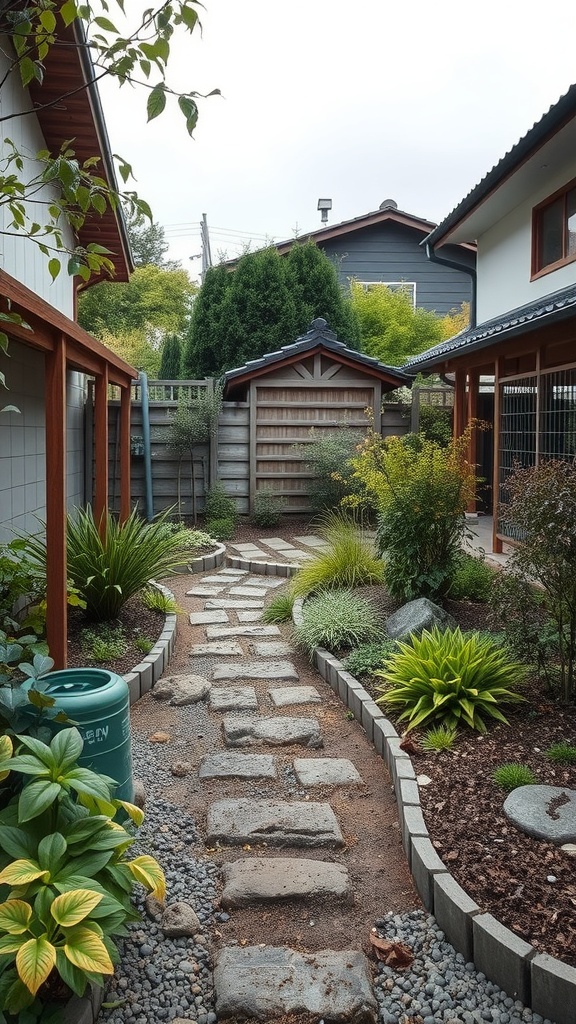
A modern Japanese garden emphasizes harmony with nature. The image shows a serene pathway lined with lush greenery and carefully placed stones. This design not only looks beautiful but also promotes sustainable gardening practices.
Using native plants is a key aspect of sustainability. These plants require less water and care, making them perfect for a low-maintenance garden. The variety of textures and colors in the garden enhances its appeal while supporting local wildlife.
Another important practice is the use of natural materials. The stone pathway and wooden structures blend seamlessly into the environment. This choice reduces the carbon footprint and creates a more eco-friendly space.
Rainwater collection systems can also be integrated into the design. A simple rain barrel can help conserve water and provide a sustainable source for garden irrigation. This practice not only saves resources but also encourages responsible water use.
Finally, composting is a great way to enrich the soil naturally. By recycling kitchen scraps and yard waste, gardeners can create nutrient-rich compost that supports plant health without chemical fertilizers. This practice aligns perfectly with the principles of a modern Japanese garden.
The Importance of Privacy
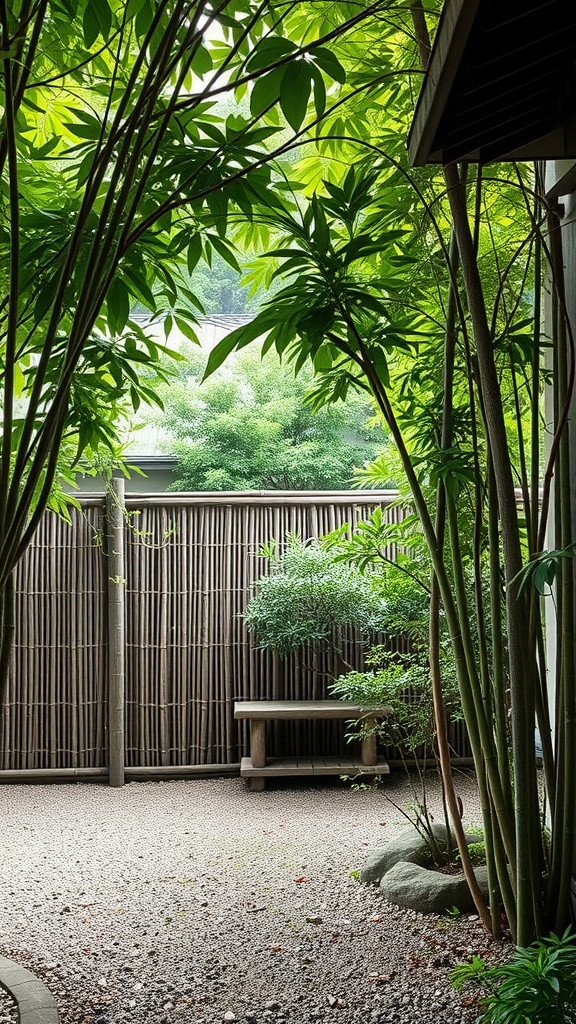
In a modern Japanese garden, privacy plays a key role. The lush greenery and carefully placed bamboo create a sense of seclusion. This design invites you to step away from the outside world.
The bamboo fence acts as a natural barrier. It shields the garden from prying eyes, allowing for peaceful moments. You can sit on the wooden bench and enjoy the tranquility without distractions.
Privacy in these gardens isn’t just about being hidden; it’s about creating a personal retreat. The arrangement of plants and stones encourages reflection and relaxation. You can truly connect with nature in this serene space.
Incorporating Seasonal Flowers
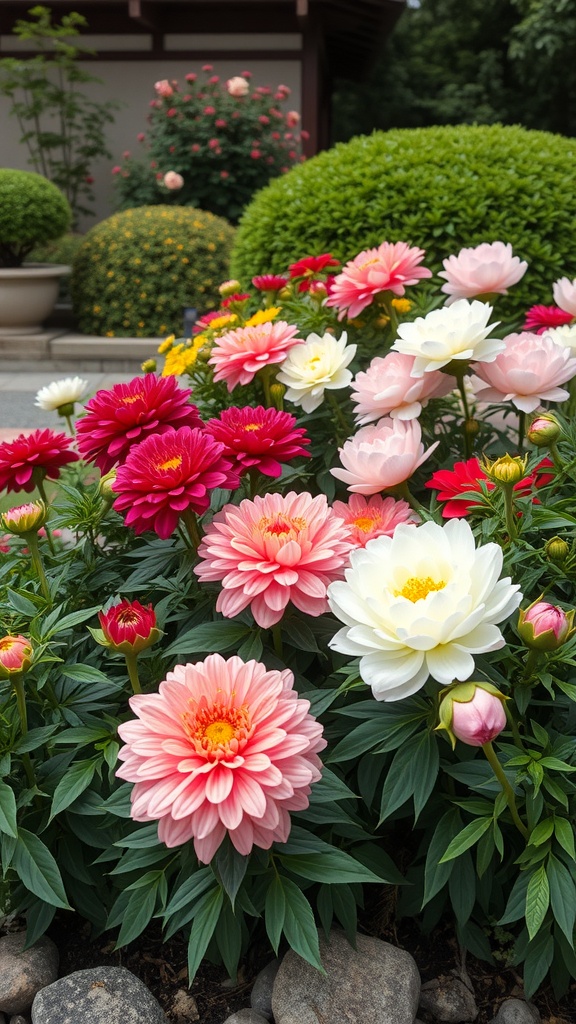
Seasonal flowers bring life and color to a modern Japanese garden. The image showcases a beautiful arrangement of vibrant blooms, including dahlias and peonies, nestled among lush greenery. These flowers not only enhance the visual appeal but also reflect the changing seasons.
Incorporating seasonal flowers allows for a dynamic garden experience. Each season offers unique blooms, from the bright colors of summer to the soft pastels of spring. This variety creates a lively atmosphere, inviting visitors to appreciate nature’s beauty throughout the year.
Choosing the right flowers is key. For instance, peonies are stunning in late spring, while dahlias shine in summer. Mixing different types of flowers can create a stunning display, ensuring that the garden remains captivating no matter the time of year.
Maintenance is also important. Regularly deadheading spent blooms encourages new growth and prolongs the flowering period. This simple task keeps the garden looking fresh and vibrant, making it a delightful space for relaxation and reflection.
Using Stones for Structure
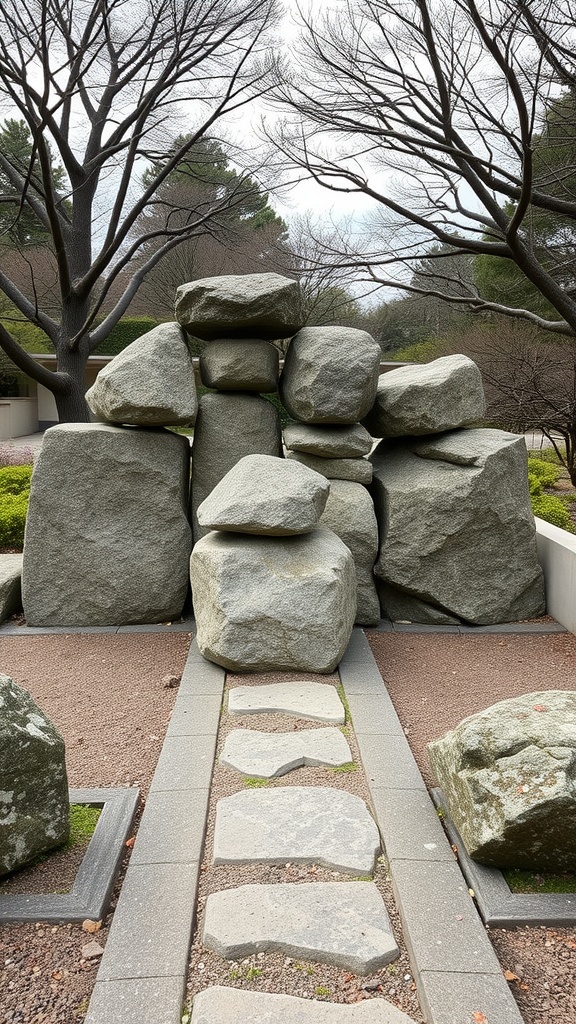
Stones play a key role in modern Japanese gardens, providing both structure and beauty. The image shows a striking arrangement of large rocks, carefully placed to create a focal point. This arrangement not only draws the eye but also invites contemplation.
The stones are often chosen for their unique shapes and textures. In this image, the varying sizes of the rocks add depth and interest. They create a natural-looking formation that feels both solid and harmonious with the surrounding landscape.
Pathways made of stone lead through the garden, guiding visitors and enhancing the experience. The stepping stones in the foreground offer a sense of direction while blending seamlessly with the natural elements. This thoughtful design encourages a peaceful stroll, allowing one to appreciate the garden’s beauty.
Incorporating stones into a garden is not just about aesthetics; it also reflects a deep respect for nature. The careful placement of each rock symbolizes balance and tranquility, key principles in Japanese garden design. This image captures that essence beautifully.
Feng Shui Elements in Japanese Gardens
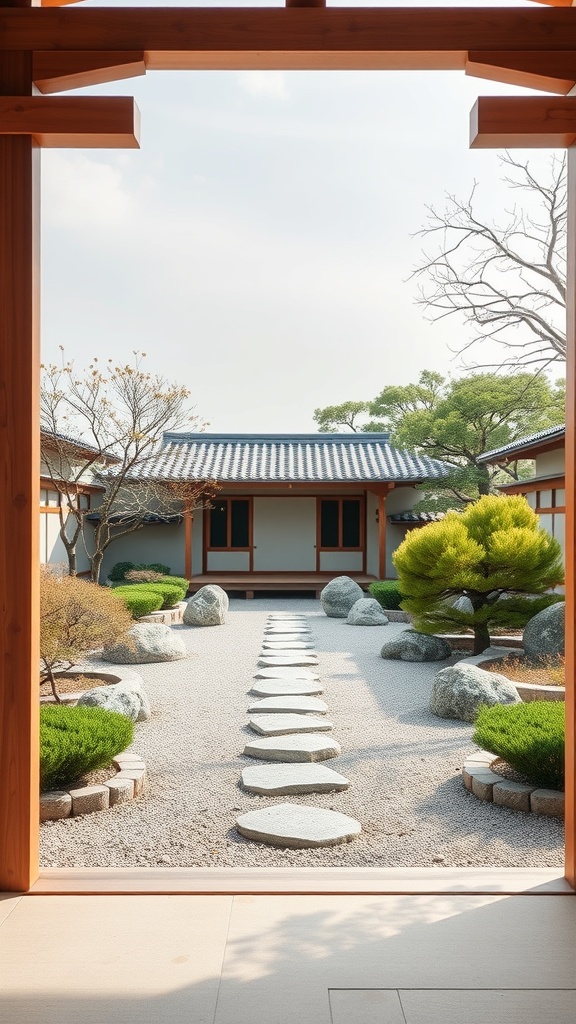
Japanese gardens are a beautiful blend of nature and design, reflecting harmony and balance. The image captures a serene garden scene, showcasing key elements that align with Feng Shui principles.
The stepping stones lead the eye through the garden, inviting visitors to explore. This path symbolizes a journey, encouraging a sense of movement and flow. Each stone is carefully placed, promoting balance and stability.
Natural elements like the carefully pruned trees and rocks create a sense of grounding. The greenery adds life and energy, while the gravel provides a calming backdrop. This combination fosters tranquility, a core aspect of Feng Shui.
Water features, though not visible in this image, are often included in Japanese gardens. They represent wealth and abundance, enhancing the overall energy of the space. The absence of clutter allows for clear energy flow, making the garden a peaceful retreat.
Incorporating these elements creates a space that not only looks beautiful but also feels harmonious. Whether you’re designing your own garden or simply enjoying the beauty of a Japanese garden, these Feng Shui principles can guide you toward a more balanced experience.
Meditation Spaces in the Garden
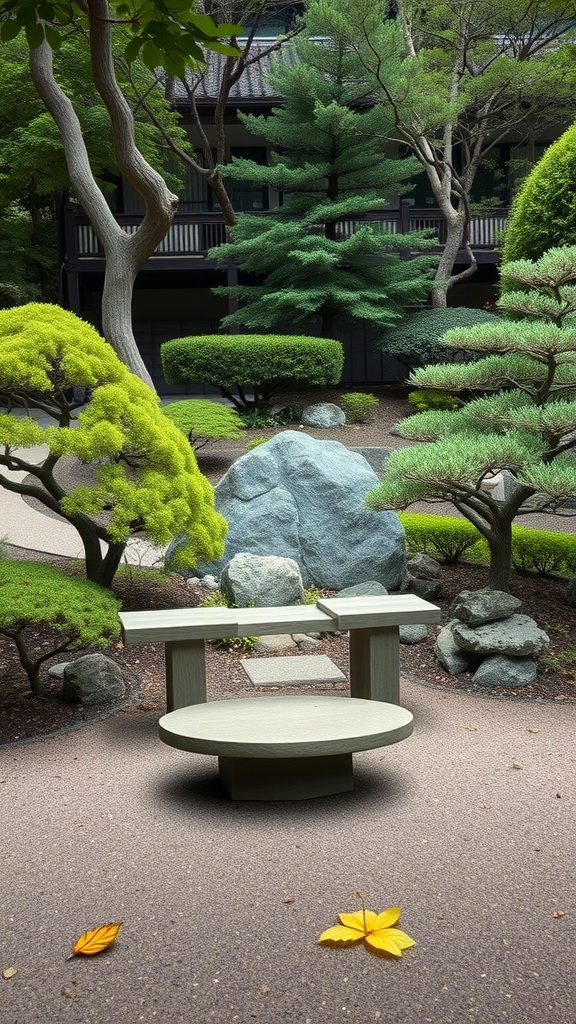
In a modern Japanese garden, meditation spaces play a key role in promoting tranquility and reflection. The image showcases a serene area with a simple yet elegant table and seating arrangement, surrounded by lush greenery and carefully placed stones. This setup invites visitors to pause and connect with nature.
The design emphasizes minimalism, which is a hallmark of Japanese aesthetics. The smooth lines of the furniture blend seamlessly with the natural elements, creating a harmonious environment. The vibrant green plants, along with the subtle textures of the rocks, enhance the calming atmosphere.
Seating areas like this encourage mindfulness. Whether you’re sipping tea or simply enjoying the view, these spaces offer a perfect retreat from daily life. The gentle rustle of leaves and the soft sounds of nature provide a soothing backdrop for meditation or quiet contemplation.
Incorporating such spaces into your garden can transform it into a peaceful haven. It’s about creating spots where you can unwind and recharge, surrounded by the beauty of nature.
Creating a Sense of Depth
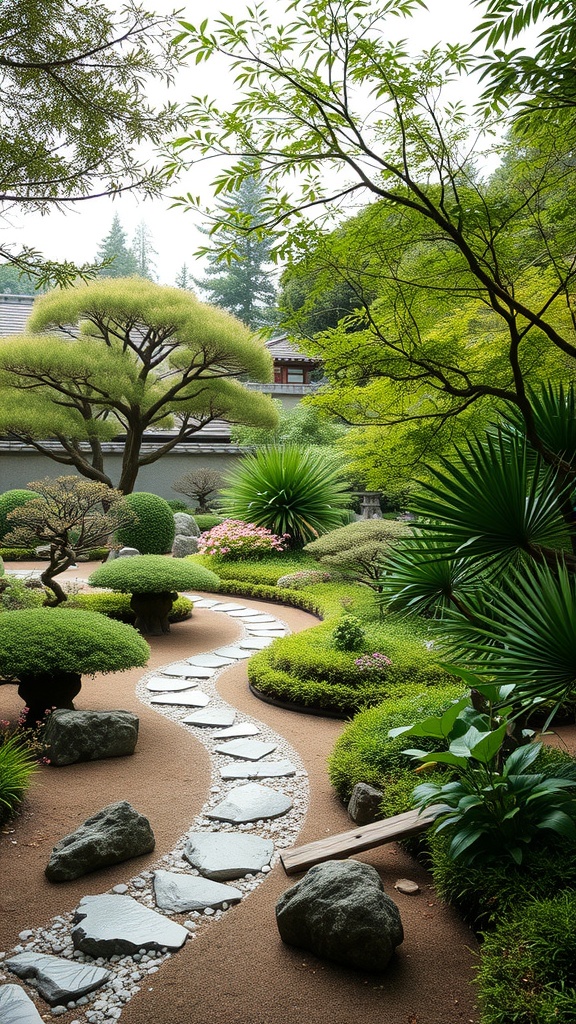
A modern Japanese garden is a beautiful blend of nature and design. The image shows a winding pathway, lined with smooth stones, leading through lush greenery. This pathway invites visitors to explore the garden, creating a sense of movement and depth.
The carefully placed rocks and plants add layers to the scene. The different heights of the trees and shrubs create visual interest, making the garden feel expansive. The soft curves of the path contrast with the sharp lines of the stones, enhancing the overall flow.
In a Japanese garden, every element has a purpose. The use of natural materials and organic shapes helps to connect the garden with its surroundings. This connection fosters a peaceful atmosphere, encouraging visitors to pause and appreciate the beauty around them.
Overall, the design of this garden emphasizes tranquility and harmony. The depth created by the path and the varied plant life invites exploration, making it a perfect escape from the everyday hustle.
The Art of Pruning
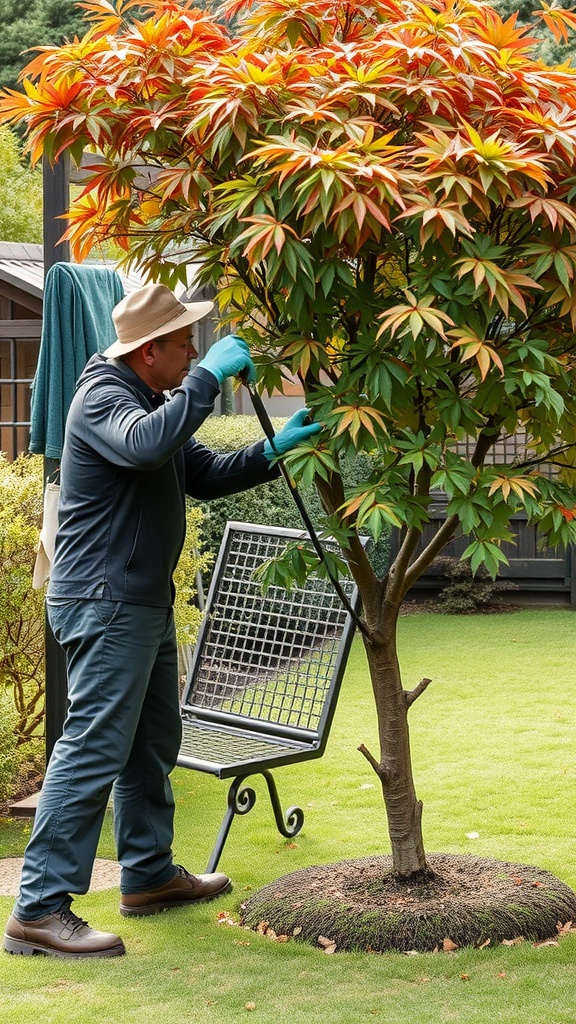
Pruning is a key part of maintaining a modern Japanese garden. It’s not just about cutting back branches; it’s an art form that shapes the garden’s beauty. In the image, we see a person carefully trimming a tree, showcasing the precision involved in this task.
The vibrant colors of the leaves, with hints of orange and green, highlight the importance of timing in pruning. The right season can enhance the tree’s health and appearance. This careful attention to detail ensures that each plant thrives and contributes to the overall harmony of the garden.
Using the right tools, like the long-handled pruner seen here, allows for clean cuts that promote healthy growth. It’s about creating balance and allowing light to reach all parts of the plant. This process not only beautifies the garden but also encourages new growth, making it a rewarding practice for any gardener.
Cultural Significance of Japanese Gardens
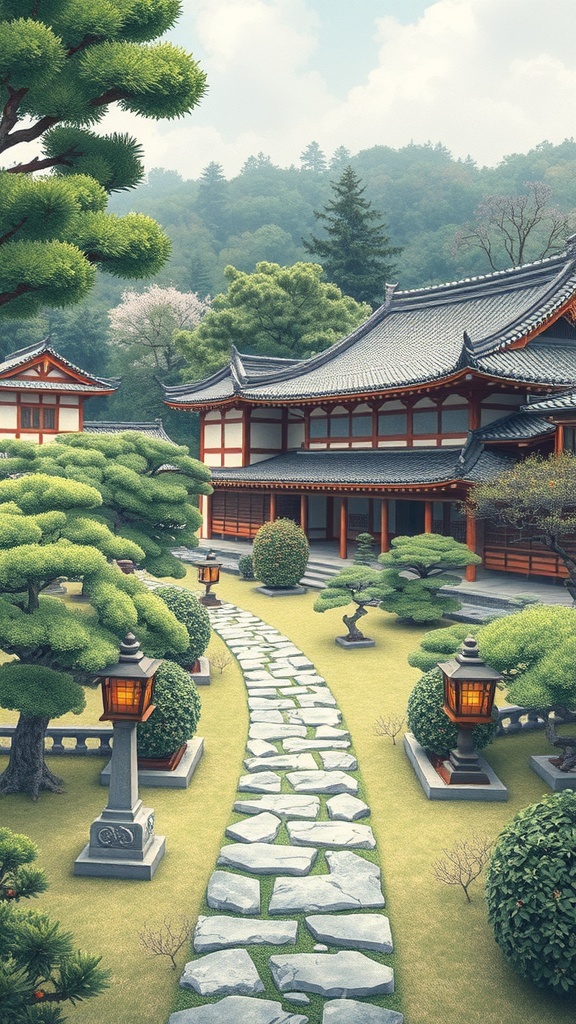
Japanese gardens are more than just beautiful landscapes; they hold deep cultural meaning. The image showcases a serene garden, complete with carefully arranged stones, lush greenery, and traditional architecture. Each element serves a purpose, reflecting harmony and balance.
The winding path invites visitors to explore, symbolizing a journey through life. The use of natural materials and the meticulous design highlight the Japanese philosophy of living in harmony with nature. Lanterns dot the landscape, representing guidance and enlightenment.
These gardens often serve as places for meditation and reflection. They provide a peaceful escape from the chaos of daily life. The presence of water features, like ponds or streams, adds to the tranquility, reminding us of the importance of water in Japanese culture.
Overall, the cultural significance of Japanese gardens lies in their ability to connect people with nature, promote mindfulness, and foster a sense of community. They are a testament to Japan’s rich heritage and its enduring appreciation for beauty and simplicity.
Weather Resilience in Garden Design
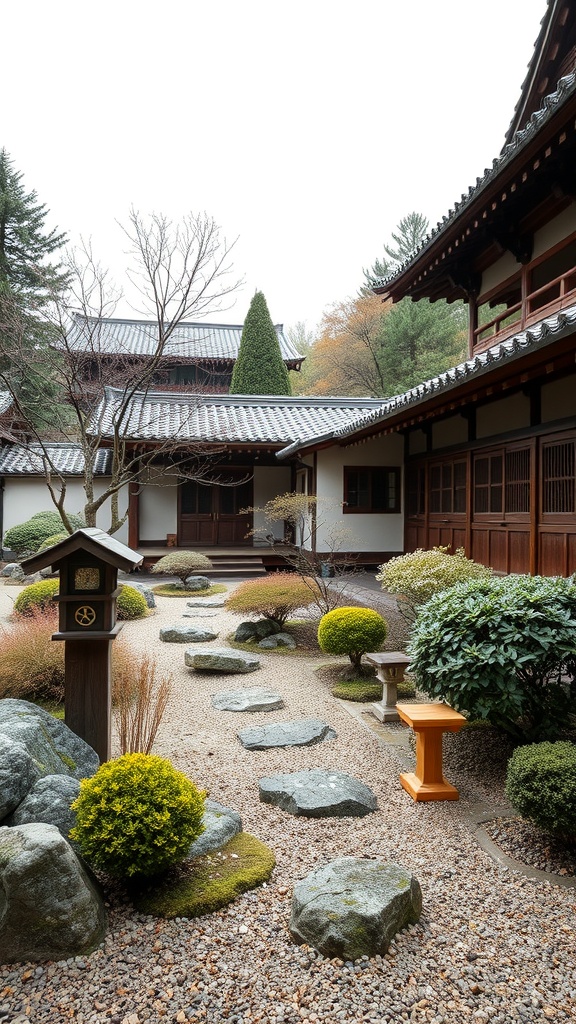
Creating a modern Japanese garden involves thoughtful design that can withstand various weather conditions. The image showcases a serene space with carefully placed stones and lush greenery. Each element is chosen not just for beauty but for its ability to thrive in different climates.
In this garden, the use of native plants helps ensure resilience. These plants are adapted to local weather patterns, making them easier to maintain. The rocks and gravel paths also play a role; they help with drainage, preventing water from pooling during heavy rains.
Additionally, the layout of the garden allows for natural windbreaks. Trees and shrubs are strategically placed to shield delicate plants from harsh winds. This thoughtful arrangement creates a balanced ecosystem that can endure seasonal changes.
Overall, a modern Japanese garden is not just a visual delight. It’s a well-planned space that respects nature’s rhythms and promotes sustainability. This approach ensures that the garden remains beautiful and functional, regardless of the weather.
Incorporating Fire Features
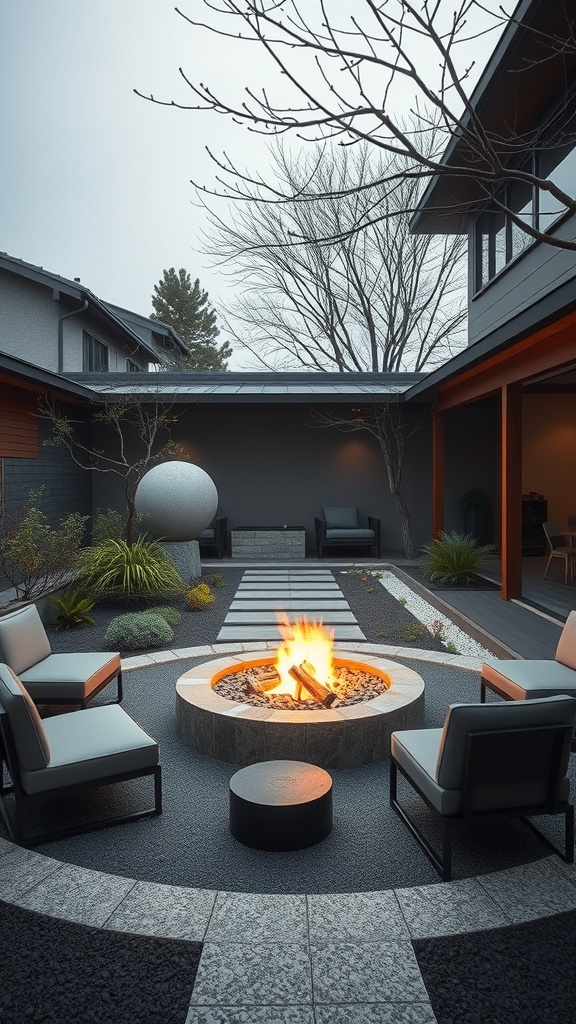
Fire features can add warmth and charm to a modern Japanese garden. In the image, a circular fire pit takes center stage, surrounded by comfortable seating. This setup invites relaxation and conversation, making it a perfect spot for gatherings.
The fire pit’s design complements the garden’s aesthetic, blending natural materials with contemporary elements. The stone base and the surrounding gravel create a harmonious look, while the flames provide a cozy glow, especially during cooler evenings.
Incorporating fire features not only enhances the visual appeal but also creates a focal point in the garden. It’s a great way to enjoy the outdoors, whether you’re roasting marshmallows or simply enjoying the warmth on a chilly night.
Consider adding some decorative stones or plants around the fire pit to enrich the space further. This can help tie the fire feature into the overall garden design, making it feel like a natural part of the environment.
Personalizing Your Japanese Garden
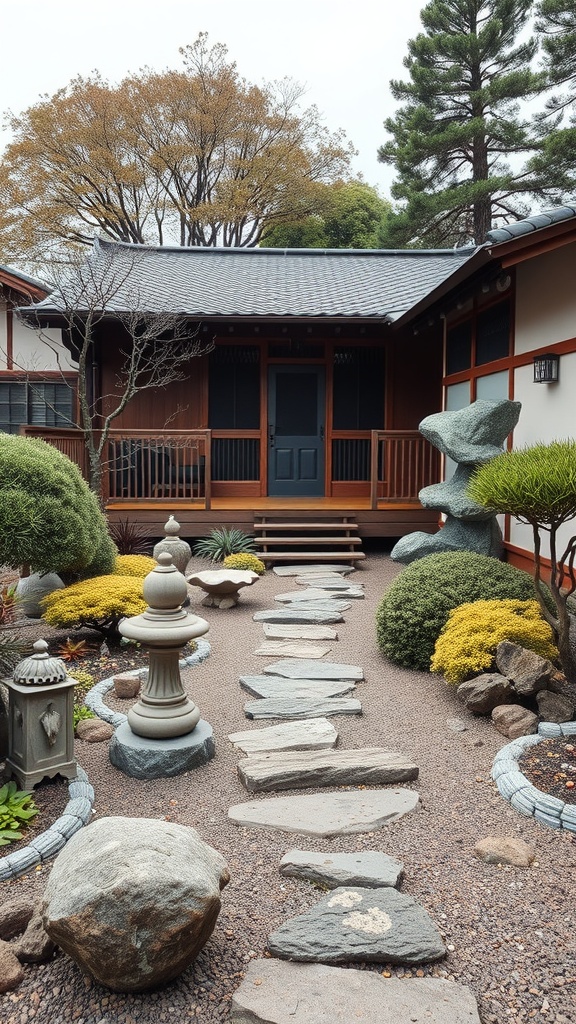
Creating a Japanese garden is a wonderful way to express your style. The image shows a serene path leading to a charming structure, surrounded by carefully placed stones and lush greenery. Each element plays a role in the overall design.
Start with the pathway. The stepping stones guide visitors through the garden, inviting them to explore. You can choose materials that resonate with you, whether it’s smooth stones or rustic slabs. The journey through the garden should feel natural and welcoming.
Next, consider the plants. The vibrant greens and subtle yellows in the image highlight the beauty of nature. Incorporate plants that thrive in your climate. Think about adding flowering shrubs or ornamental grasses to bring color and texture.
Don’t forget the decorative features. The lantern and stone sculptures add character and charm. You can personalize these elements by selecting pieces that reflect your personality. Whether it’s traditional or modern, these accents can make your garden truly yours.
Lastly, think about the overall layout. The balance between open spaces and plantings creates harmony. Take your time to arrange everything until it feels just right. Your Japanese garden should be a peaceful retreat that showcases your unique taste.